 English
 中文简体
中文简体 عربى
عربى
Contact Us




founded in 2006, is an enterprise focusing on the R&D, manufacturing, and customization of non-standard bearings, high-precision bearings (import substitution), and bearing accessories and mechanical parts. With more than 30 years of technical design experience, FTM has earned an excellent reputation in the field of high-quality bearings. Our professional technical team provides domestic and foreign customers with high-quality bearing solutions in engineering machinery, textile machinery, and other fields.
News Directory
- Introduction to Cam Follower Roller Bearing Technology
- Structural Design and Component Integration
- Stud-Type vs. Yoke-Type Cam Followers: A Technical Comparison
- Material Science and Surface Treatments
- Load Ratings and Kinematic Considerations
- Lubrication Systems and Sealing Solutions
- Failure Analysis and Prevention
- Application Diversity in Modern Industry
- Precision Manufacturing and Quality Control
- FAQs
- 1. What is the difference between a crowned and a cylindrical outer ring?
- 2. Can cam followers handle axial or thrust loads?
- 3. How often should cam follower roller bearings be lubricated?
- 4. Why is the position of the grease hole important during installation?
- 5. What causes the outer ring of a cam follower to crack?
- References
Author: FTM
Date: Mar 22, 2026
Comprehensive Engineering Guide to Cam Follower Roller Bearings: Technical Selection, Performance Optimization, and Maintenance Strategies
Introduction to Cam Follower Roller Bearing Technology
Cam follower roller bearings, also referred to as track rollers, are specialized roller bearings designed to follow cam profiles or tracks in a wide array of linear motion and power transmission systems. Unlike standard radial bearings that are housed within a bore, cam followers operate with their outer rings directly contacting a mating track or cam surface. This unique operational requirement necessitates a significantly thicker outer ring to withstand high radial loads and minimize deformation under pressure. In the global industrial landscape, these components are critical for ensuring the precision and longevity of automated machinery, especially in sectors such as packaging, material handling, and automotive manufacturing.
Structural Design and Component Integration
The internal architecture of a cam follower is engineered for high rigidity and load-bearing capacity. At its core, the assembly typically consists of a heavy-duty stud or a precision-ground inner ring, a full complement or caged set of needle or cylindrical rollers, and a robust outer ring. The outer ring is available in two primary profiles: crowned and cylindrical. Crowned outer rings are designed to compensate for minor misalignment between the bearing and the track, effectively reducing edge loading and extending the service life of both the bearing and the rail. Conversely, cylindrical outer rings provide a larger contact area, making them ideal for applications involving high-capacity loads where the track and bearing are perfectly aligned.
Stud-Type vs. Yoke-Type Cam Followers: A Technical Comparison
Understanding the distinction between stud-type and yoke-type configurations is essential for mechanical design. Stud-type cam followers feature an integral threaded stud, allowing for easy cantilever mounting onto a machine frame. This design is highly advantageous in space-constrained environments where access is limited to one side of the mounting surface. In contrast, yoke-type followers are designed for mounting on a pin or shaft between two supports, known as a clevis or yoke mounting. This double-shear arrangement provides superior structural support and is preferred for heavy-duty applications where the cantilevered stud of a standard follower might experience excessive bending moments.
| Feature | Stud-Type Cam Follower | Yoke-Type Cam Follower |
|---|---|---|
| Mounting Style | Cantilever (Single Side) | Clevis / Yoke (Double Support) |
| Installation | Threaded Stud with Nut | Mounted on a separate shaft/pin |
| Load Distribution | Higher stress on stud neck | Balanced load across two supports |
| Maintenance | Easier to replace individually | Requires shaft removal for replacement |
| Best For | Compact spaces and easy assembly | Maximum load capacity and stability |
Material Science and Surface Treatments
The performance of cam follower roller bearings is heavily dependent on material selection and heat treatment processes. Most high-quality industrial followers are manufactured from high-carbon chromium bearing steel, which undergoes rigorous induction hardening to achieve a surface hardness of HRC 58 to 62. For applications in corrosive environments, such as food processing or chemical plants, stainless steel variants (440C or similar) are employed to prevent oxidation and contamination. Furthermore, advanced surface treatments like black oxide coating or thin dense chrome plating can be applied to enhance wear resistance and provide a secondary layer of protection against harsh operating conditions.
Load Ratings and Kinematic Considerations
Engineers must evaluate both dynamic and static load ratings when selecting a bearing. However, for cam followers, the “Track Capacity” is an equally vital metric. Track capacity refers to the maximum load that the outer ring can support without causing permanent deformation to the mating track or the ring itself. Because the contact is localized, high-speed applications may also face challenges related to centrifugal forces and heat generation. Caged designs are typically used for high-speed rotation as the cage maintains uniform roller spacing and reduces friction, while full-complement designs maximize the number of rollers to achieve the highest possible static load rating for slow-moving, heavy-load applications.
Lubrication Systems and Sealing Solutions
Effective lubrication is the lifeblood of any rolling element bearing. Cam followers are often supplied pre-greased with high-performance lithium soap-based grease. Depending on the application, they may feature various sealing options:
- Open Design: Best for environments with centralized lubrication systems.
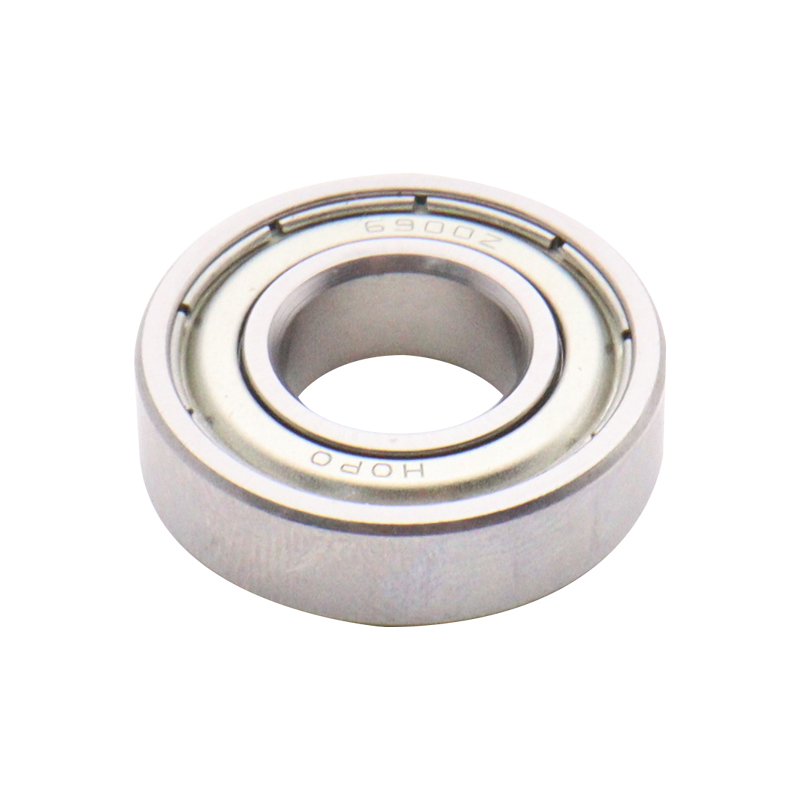
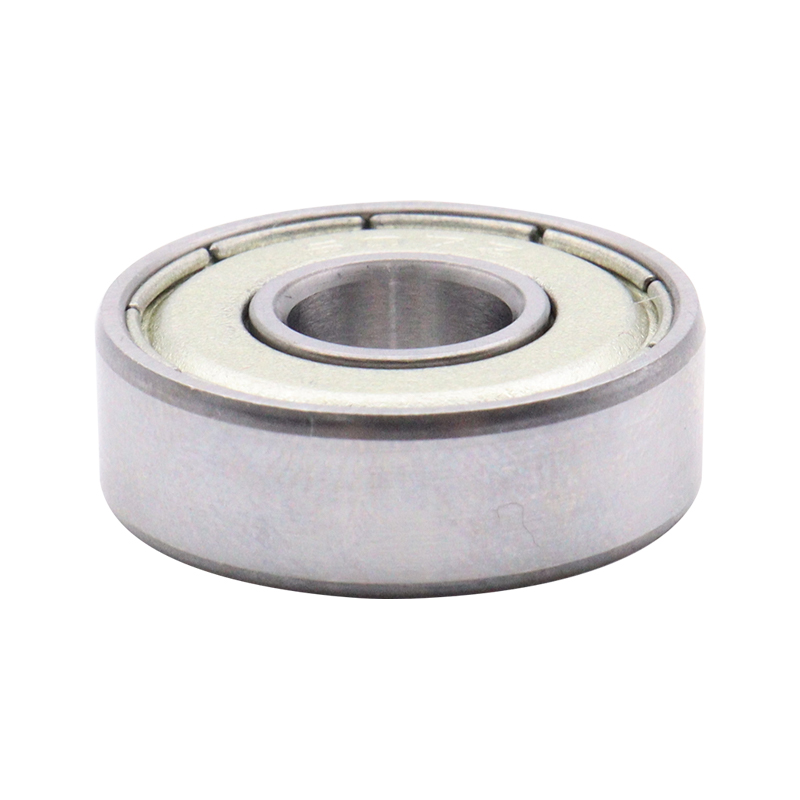
- Shielded (ZZ): Metal shields protect against large debris while retaining grease.
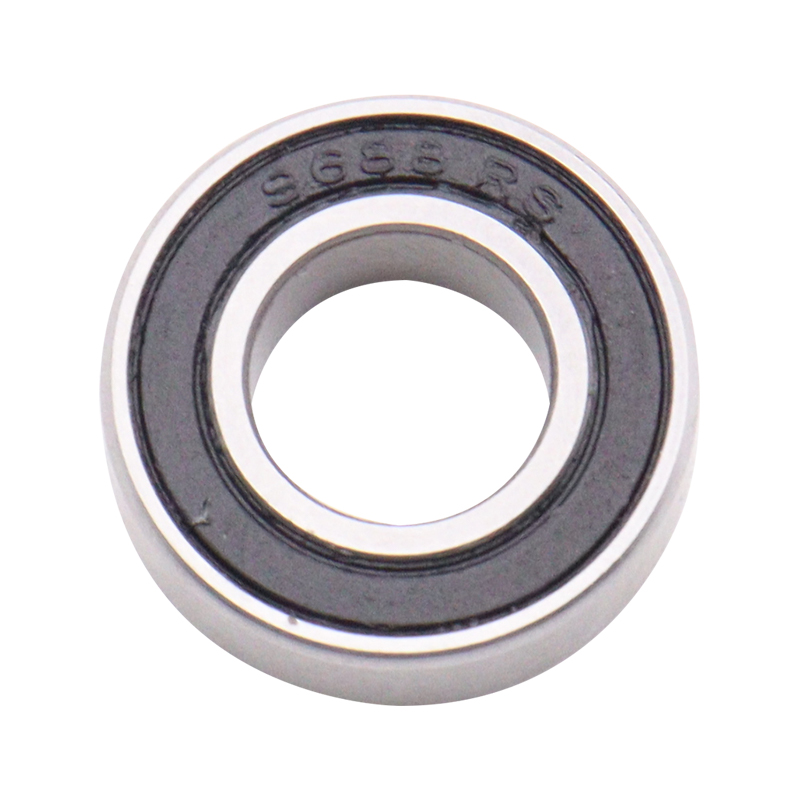
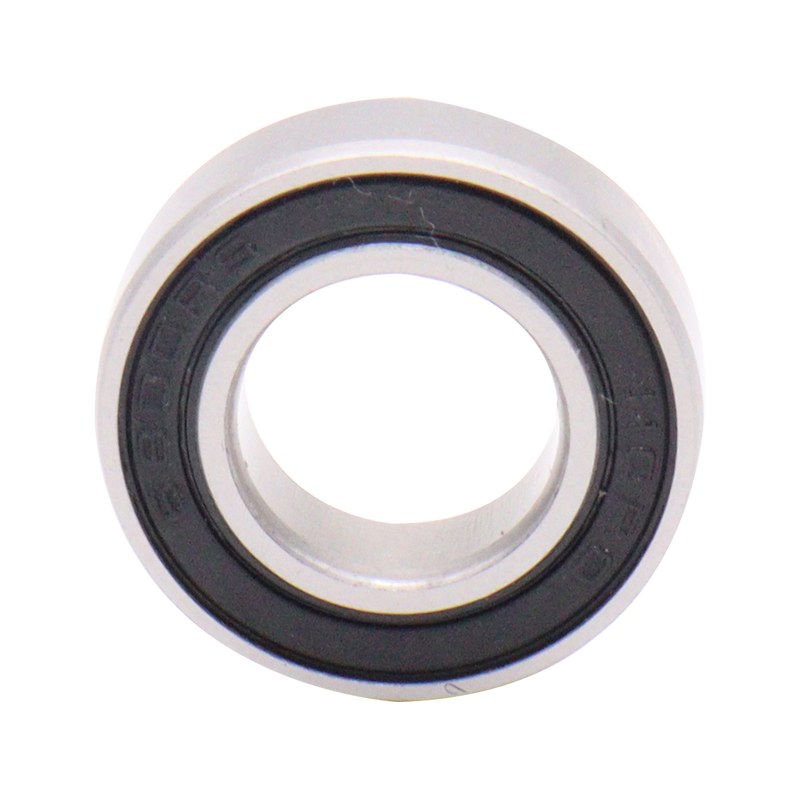
- Sealed (UU/LL): Synthetic rubber seals provide the best protection against fine dust and moisture.
Advanced models include lubrication holes at the stud ends and on the side of the stud, allowing for re-greasing even after the bearing has been installed in a complex assembly.
Failure Analysis and Prevention
Premature failure in cam followers is usually attributed to three factors: lubrication breakdown, misalignment, and overloading. Surface pitting or spalling on the outer ring is a classic sign of fatigue, whereas “skidding” marks indicate that the roller is sliding rather than rolling, often due to insufficient radial load or excessive grease viscosity. To prevent these issues, regular inspection intervals should be established. Ensuring that the greasing hole is positioned in the “unloaded zone” of the stud is a critical installation step that allows for even grease distribution and prevents the blockage of lubricant flow under high pressure.
Application Diversity in Modern Industry
The versatility of cam followers allows them to excel in diverse mechanical systems. In automated storage and retrieval systems (ASRS), they guide the heavy carriages along vertical and horizontal rails with minimal friction. In the printing industry, they manage the precise timing and movement of oscillating rollers. Even in heavy-duty construction equipment, cam followers are utilized in sliding mechanisms and track tensioners. The ability to customize dimensions, seal types, and coatings makes them an indispensable component for modern engineering challenges.
Precision Manufacturing and Quality Control
As a manufacturer, ensuring the geometric accuracy of the outer ring and the internal raceways is paramount. High-precision grinding processes ensure that the runout is kept within microns, which is essential for high-speed tracking and noise reduction. Quality control protocols, including ultrasonic testing for material defects and coordinate measuring machine (CMM) inspections for dimensional accuracy, ensure that each batch of cam followers meets international standards such as ISO 9001 and specialized bearing industry requirements.
FAQs
1. What is the difference between a crowned and a cylindrical outer ring?
A crowned outer ring has a slight radius on its outer surface to prevent edge loading caused by minor misalignment. A cylindrical outer ring is flat and provides a larger contact area, which is better for high-load applications where the track and bearing are perfectly aligned.
2. Can cam followers handle axial or thrust loads?
Standard cam followers are primarily designed for radial loads. While they can handle small incidental thrust loads caused by mounting errors, heavy or continuous axial loads will lead to premature failure. Special designs with integrated thrust washers or ball elements are available for applications requiring axial support.
3. How often should cam follower roller bearings be lubricated?
The interval depends on the speed, load, and environment. For high-speed or high-temperature operations, re-greasing may be required weekly. In clean, moderate environments, many sealed cam followers can operate for months or even years without maintenance.
4. Why is the position of the grease hole important during installation?
The grease hole on the stud should be located in the unloaded zone (the side opposite to where the load is applied). This ensures that the lubricant can flow freely into the bearing and distribute evenly across the rollers.
5. What causes the outer ring of a cam follower to crack?
Cracking is usually caused by excessive shock loads that exceed the material’s fracture toughness or by over-tightening the mounting nut, which puts undue stress on the stud and can lead to structural failure under load.
References
- Harris, T. A., & Kotzalas, M. N. (2006). Rolling Bearing Analysis: Essential Concepts of Bearing Technology. CRC Press.
- ISO 6125:2016. Rolling bearings – Track rollers – Boundary dimensions and tolerances.
- SKF Group. Rolling Bearings in Industrial Applications: Technical Handbook.
- American Bearing Manufacturers Association (ABMA). Standard 18.1: Needle Roller Bearings, Radial, Metric Design.
- Society of Tribologists and Lubrication Engineers (STLE). Guidelines for Industrial Bearing Lubrication.
Selected Bearing Display

 Download Catalog
