 English
 中文简体
中文简体 عربى
عربى
Contact Us




founded in 2006, is an enterprise focusing on the R&D, manufacturing, and customization of non-standard bearings, high-precision bearings (import substitution), and bearing accessories and mechanical parts. With more than 30 years of technical design experience, FTM has earned an excellent reputation in the field of high-quality bearings. Our professional technical team provides domestic and foreign customers with high-quality bearing solutions in engineering machinery, textile machinery, and other fields.
News Directory
- Introduction to Roller Bearing Technology
- 1. Cylindrical Roller Bearings: High Speed Radial Specialists
- 2. Tapered Roller Bearings: The Combined Load Experts
- 3. Spherical Roller Bearings: Self Aligning Powerhouses
- Technical Comparison Table: Performance Metrics
- 4. Material Science and Heat Treatment in Roller Bearing Manufacturing
- 5. Lubrication Dynamics and Sealing Solutions
- 6. Common Failure Modes and Prevention Strategies
- 7. Critical Selection Criteria for B2B Procurement
- Conclusion
- FAQs
- Related References
Author: FTM
Date: Apr 19, 2026
Comprehensive Technical Comparison of Roller Bearings: Structural Design and Industrial Application Guide
Introduction to Roller Bearing Technology
Roller bearings are fundamental mechanical components engineered to facilitate rotational or linear motion while reducing friction and handling significant structural loads. Unlike ball bearings, which utilize spherical elements to create point contact, roller bearings employ cylindrical, tapered, or barrel-shaped rollers to establish line contact with the raceways. This fundamental geometric difference allows roller bearings to support much higher load capacities, making them indispensable in heavy duty industrial sectors, including mining, construction, energy, and large scale manufacturing.
For global B2B procurement and engineering departments, selecting the correct roller bearing is not merely a matter of size but a critical decision involving load vectors, misalignment tolerances, speed ratings, and environmental resistance. This article provides an exhaustive technical analysis of the three primary categories of roller bearings: cylindrical, tapered, and spherical, exploring their unique mechanical advantages and performance limitations.
1. Cylindrical Roller Bearings: High Speed Radial Specialists
Cylindrical roller bearings are designed to handle exceptionally high radial loads at relatively high speeds. The rolling elements are ground to provide modified line contact with the inner and outer ring raceways, which helps to minimize edge stresses.
Structural Characteristics
The design of a cylindrical roller bearing often involves an inner or outer ring with ribs that guide the rollers. Depending on the configuration of these ribs, the bearing may be classified into various types such as NU, NJ, NUP, or N. For instance, the NU type has two ribs on the outer ring and none on the inner ring, allowing for axial displacement of the shaft relative to the housing in both directions. This makes them ideal for use as floating bearings.
Load Capacity and Precision
Because the rollers and raceways are in linear contact, these bearings offer high radial stiffness. They are frequently used in precision machine tool spindles, electric motors, and automotive gearboxes. However, their ability to handle axial loads is strictly limited. While designs like the NJ or NUP can accommodate light axial loads in one or both directions through the contact between the roller ends and the ring ribs, they are fundamentally not intended for primary thrust applications.
2. Tapered Roller Bearings: The Combined Load Experts
Tapered roller bearings consist of four interdependent components: the cone (inner ring), the cup (outer ring), the tapered rollers, and the cage. These bearings are uniquely engineered to manage both substantial radial and axial loads simultaneously.
The Geometry of Tapered Design
The geometry of the rollers and raceways is designed such that all the tapered surfaces meet at a common point on the bearing axis. This conical design ensures true rolling motion and creates a high degree of stability under combined loading conditions. The axial load carrying capacity of these bearings is determined by the contact angle; the larger the angle, the higher the axial load resistance.
Application in Heavy Equipment
Due to their robust nature, tapered roller bearings are the standard choice for automotive wheel hubs, transmission systems, and agricultural machinery. In B2B export markets, these are often sold in matched pairs. When two single row tapered roller bearings are mounted in opposition, they can handle axial loads in both directions and provide extremely rigid shaft support.
3. Spherical Roller Bearings: Self Aligning Powerhouses
In many industrial environments, shaft deflection or housing misalignment is inevitable. Spherical roller bearings are specifically designed to address these challenges while supporting massive radial and moderate axial loads.
The Spherical Advantage
The outer ring raceway of a spherical roller bearing is part of a sphere, with the center of curvature coinciding with the bearing axis. This allows the inner ring and rollers to tilt within the outer ring, compensating for several degrees of misalignment without increasing friction or reducing service life.
Internal Configuration
These bearings typically feature two rows of barrel shaped rollers. They are used extensively in harsh environments such as paper mills, wind turbines, and vibratory screens. Their ability to survive shock loads and contaminated conditions makes them a premium choice for heavy industrial applications where maintenance access might be limited.
Technical Comparison Table: Performance Metrics
The following table summarizes the key technical differences between the three major roller bearing categories to assist in the selection process.
| Feature | Cylindrical Roller Bearings | Tapered Roller Bearings | Spherical Roller Bearings |
|---|---|---|---|
| Primary Load Type | High Radial | Combined (Radial and Axial) | Very High Radial / Moderate Axial |
| Speed Capability | High | Moderate to High | Low to Moderate |
| Misalignment Tolerance | Very Low | Low | Very High (Self-aligning) |
| Friction Levels | Low | Moderate | Moderate to High |
| Typical Applications | Electric Motors, Spindles | Vehicle Hubs, Gearboxes | Mining, Wind Turbines, Steel Mills |
| Rigidity | High Radial Rigidity | High System Rigidity | Moderate Rigidity |
| Mounting Complexity | Simple | Requires Preloading/Adjustment | Moderate |
4. Material Science and Heat Treatment in Roller Bearing Manufacturing
The performance of a roller bearing is significantly influenced by the quality of the steel and the heat treatment processes used during manufacturing. Most high quality roller bearings are produced from high carbon chromium steel (GCr15), which provides the necessary hardness and fatigue resistance.
Case Hardening vs. Through Hardening
For applications involving high impact or shock loads, such as in mining equipment, case hardened steel is often preferred. Case hardening creates a hard, wear resistant outer layer while maintaining a ductile, tough core that can absorb energy without fracturing. Through hardening, on the other hand, provides uniform hardness throughout the component, which is ideal for standard industrial applications requiring high precision and stability.
Dimensional Stability
During the manufacturing process, bearings may undergo specialized tempering to ensure dimensional stability at high operating temperatures. This is crucial for bearings exported to regions with extreme climates or for use in high temperature industrial ovens and motors.
5. Lubrication Dynamics and Sealing Solutions
Lubrication is the lifeblood of any roller bearing. It serves three primary purposes: reducing friction between sliding surfaces, dissipating heat, and protecting the internal components from corrosion and contamination.
Grease vs. Oil Lubrication
Grease is the most common lubricant for roller bearings due to its ease of retention and sealing properties. However, in high speed or high temperature applications, oil lubrication (either through oil baths or circulating systems) is required to ensure adequate heat removal.
Advanced Sealing Technologies
In the global export market, bearings are often required to operate in dusty or wet environments. Advanced sealing solutions, such as labyrinth seals or reinforced rubber contact seals, are integrated into the bearing design to prevent the ingress of contaminants. A failure in the sealing system is one of the most common causes of premature bearing fatigue and failure.
6. Common Failure Modes and Prevention Strategies
Understanding why roller bearings fail is essential for engineers and procurement managers to improve equipment uptime.
- Fatigue Spalling: This appears as pitting or flaking on the raceways. It is usually a result of the bearing reaching the end of its natural calculated life, but it can be accelerated by overloading.
- Smearing and Scuffing: This occurs when the rollers slide rather than roll, often due to inadequate lubrication or insufficient load. It is particularly common in large cylindrical roller bearings operating at high speeds with light loads.
- Corrosion: Manifests as reddish brown stains on the rolling elements. This is caused by water ingress or poor storage conditions during transit in international shipping.
- Brinelling: Indentations in the raceways caused by static overloading or incorrect mounting techniques (such as hammering the bearing into place).
7. Critical Selection Criteria for B2B Procurement
When sourcing roller bearings for international industrial projects, several technical factors must be verified:
- Basic Dynamic Load Rating ©: This value represents the constant load under which the bearing can achieve a rating life of one million revolutions.
- Limiting Speed: This is the maximum speed at which the bearing can operate without generating excessive heat that would lead to failure.
- Internal Clearance: Proper selection of C3 or C4 clearance is vital for applications where heat expansion of the shaft is expected.
- Tolerance Class: For precision machinery, bearings must meet P6, P5, or higher ISO tolerance classes to ensure minimal vibration and runout.
Conclusion
The selection of roller bearings is a sophisticated engineering task that directly impacts the efficiency and reliability of industrial machinery. Cylindrical roller bearings offer the best performance for high speed radial tasks, while tapered roller bearings are the definitive choice for combined loading and system rigidity. Spherical roller bearings provide the necessary resilience for applications plagued by misalignment and harsh conditions.
By understanding these technical nuances, manufacturers and exporters can ensure they provide the most effective solutions to their global clients, optimizing both performance and cost efficiency.
FAQs
1. Can cylindrical roller bearings handle any axial load?
Standard NU and N types cannot handle axial loads. However, NJ and NUP types are designed with ribs on both the inner and outer rings, allowing them to support light axial loads in one or two directions, respectively.
2. Why do tapered roller bearings need to be adjusted during installation?
Tapered roller bearings are typically used in pairs. Because of their conical geometry, applying a radial load generates an induced axial force. To ensure stability and precision, the internal clearance or preload must be set correctly during assembly.
3. What is the main advantage of a spherical roller bearing over a ball bearing?
The primary advantage is load capacity. Due to line contact, spherical roller bearings can support significantly higher radial loads. Additionally, their self-aligning capability allows them to operate effectively even when the shaft is slightly deflected.
4. How does temperature affect roller bearing selection?
High temperatures reduce the viscosity of lubricants and can cause dimensional changes in the bearing rings. For high temperature environments, bearings must be heat stabilized and paired with specialized high temperature grease or synthetic oil.
5. What is the difference between P0 and P6 tolerance classes?
These refer to the precision of the bearing. P0 is the standard normal tolerance for general applications. P6 indicates higher precision with tighter tolerances on dimensions and running accuracy, suitable for more demanding industrial machinery.
Related References
- ISO 281: Rolling bearings — Dynamic load ratings and rating life.
- ISO 76: Rolling bearings — Static load ratings.
- Harris, T. A., and Kotzalas, M. N., “Rolling Bearing Analysis,” Fifth Edition, CRC Press.
- SKF Group, “Bearing Selection Process and Technical Specifications Guide.”
- ABMA (American Bearing Manufacturers Association) Standard 19.1: Tapered Roller Bearings.
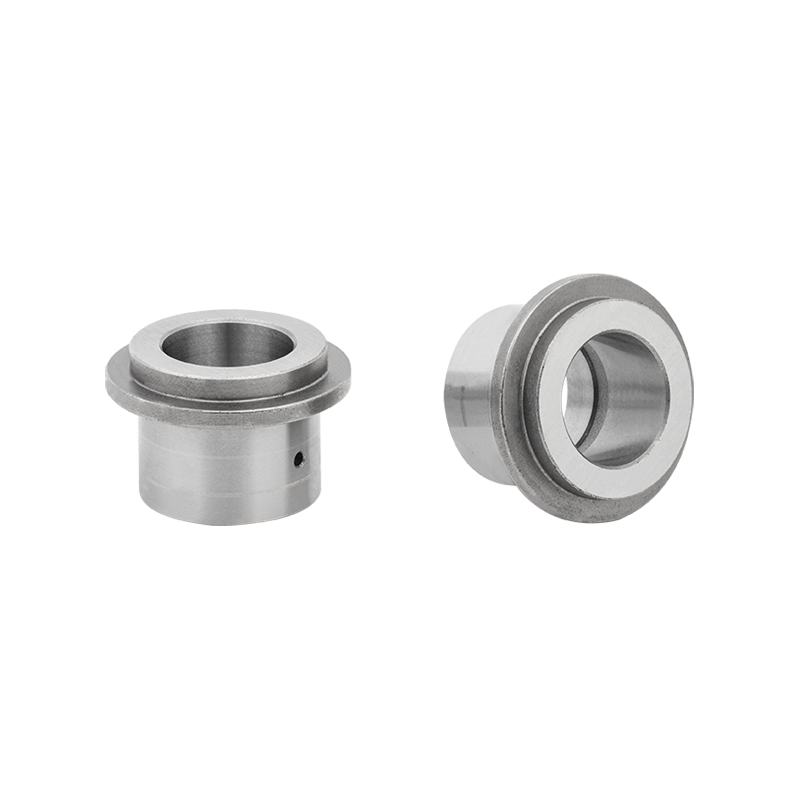
Selected Bearing Display

 Download Catalog
