 English
 中文简体
中文简体 عربى
عربى
Contact Us




founded in 2006, is an enterprise focusing on the R&D, manufacturing, and customization of non-standard bearings, high-precision bearings (import substitution), and bearing accessories and mechanical parts. With more than 30 years of technical design experience, FTM has earned an excellent reputation in the field of high-quality bearings. Our professional technical team provides domestic and foreign customers with high-quality bearing solutions in engineering machinery, textile machinery, and other fields.
News Directory
- 1. Structural and Dimensional Classifications
- 2. Advanced Material Engineering and Composition
- 3. Kinematic Optimization for Multi-Axis Load Profiles
- 4. Sealing Technology and Contamination Prevention
- 5. Comprehensive Total Cost of Ownership Analysis
- 6. Manufacturing Tolerances and Quality Protocols
- FAQ Section
- What defines a bearing as non-standard compared to standard options?
- Can standard bearing housings be adapted to use non-standard bearings?
- Why do custom ceramic hybrid bearings perform better at high rotational speeds?
- How do custom internal clearance modifications prevent bearing seizure?
- What information should procurement teams provide to a non-standard bearing manufacturer?
- References
Author: FTM
Date: May 17, 2026
Non-Standard Bearings vs Standard Bearings: Industrial Engineering Selection Guide
In global industrial manufacturing, rotating machinery relies heavily on precise component choices to maintain operational continuity. Original Equipment Manufacturers (OEMs) and heavy machinery designers constantly face a fundamental choice when developing mechanical systems: utilize high-volume standard bearings or invest in precision-engineered non-standard bearings. While mass-produced standard components align with universal housing profiles, specialized machinery operating under complex load cases or severe environmental conditions often requires customized geometry and material structures. This guide provides a detailed technical analysis of non-standard bearings, evaluating their structural differences, material options, and engineering selection parameters against standard configurations.
1. Structural and Dimensional Classifications
Standard bearings adhere strictly to international dimensional standards, including ISO and ANSI boundary specifications. These rules govern the outer diameter, inner diameter (bore), width, and running tolerances of each unit. For example, a standard deep groove ball bearing features rigid geometry that fits neatly into universal commercial housings.
Conversely, non-standard bearings are designed to break free from these fixed dimensional matrices. When a mechanical assembly imposes strict spatial limits, or when the shaft and housing cannot accommodate standard profiles, custom dimension bearings become necessary.
Dimensional modification typically involves three primary areas:
- Non-Standard Bores: Custom inner diameters designed to match stepped shafts or specialized hydraulic sleeves directly, eliminating the need for intermediate adapters or spacer rings.
- Modified Width Profiles: Thin-section designs or extended inner rings that double as locating shoulders, helping to minimize the overall axial footprint of the machinery.
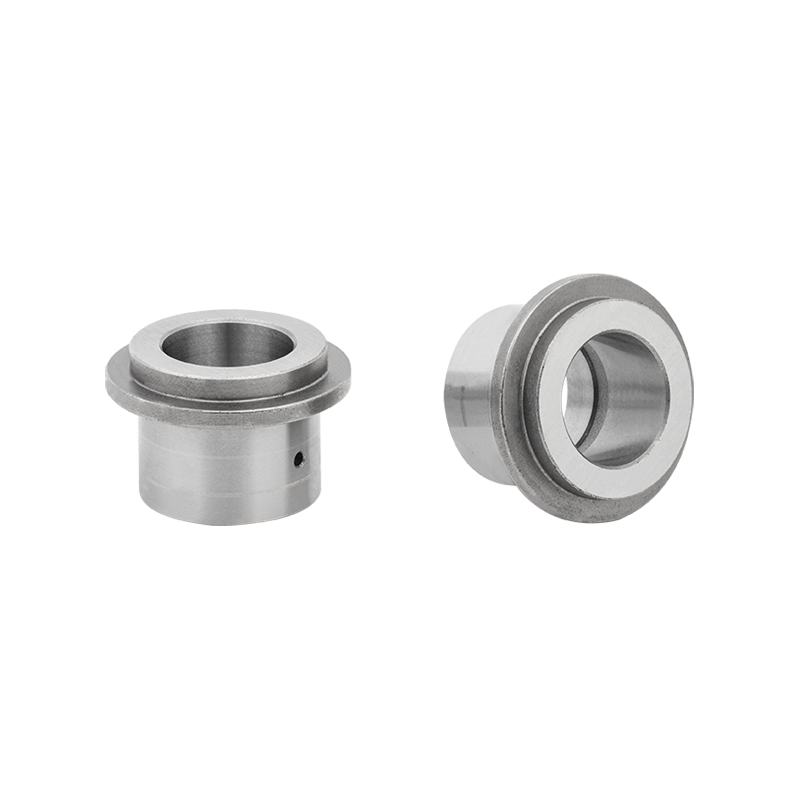
- Integrated Flanges and Outer Ring Variations: Outer rings can be machined with integral mounting flanges, anti-rotation slots, or snap-ring grooves. This simplifies assembly by combining multiple structural components into a single precision unit.
2. Advanced Material Engineering and Composition
Standard bearings typically use high-carbon chromium steel as their primary material. While this material offers excellent surface hardness and fatigue resistance under normal running conditions, it can degrade rapidly when exposed to corrosive chemical vapor, extreme thermal cycles, or high stray electrical currents.
Non-standard bearing manufacturing allows engineers to select specialized materials tailored to specific environmental conditions.
| Component Part | Standard Bearings Material | Non-Standard Bearings Options | Industrial Application Benefit |
|---|---|---|---|
| Inner & Outer Rings | High-Carbon Chrome Steel | Stainless Steel, High-Temperature Alloys, Titanium Alloys | Corrosion resistance, acid neutrality, significant weight reduction |
| Rolling Elements | Chrome Steel Balls / Rollers | Silicon Nitride Ceramics, Zirconia | Electrical insulation, lower centrifugal force, minimal heat buildup |
| Retaining Cages | Pressed Carbon Steel, Machined Brass | PEEK, Engineered Nylon, Silver-Plated Bronze | Self-lubricating properties, low friction torque, high chemical resistance |
By utilizing these specialized materials, custom bearings can operate reliably in harsh environments that would quickly cause standard steel components to fail. For instance, combining steel rings with silicon nitride ceramic balls creates a hybrid bearing. Because ceramic elements have lower mass density, they experience less centrifugal force at high rotational speeds, making them ideal for high-precision machine tool spindles.
3. Kinematic Optimization for Multi-Axis Load Profiles
Standard bearings are rated for specific radial or axial load paths, assuming uniform distribution across standard pitch circle diameters. However, complex industrial machinery often subjects bearings to combined multi-axis forces, high moment loads, or severe structural shock vibrations.
Non-standard bearings help address these complex force profiles through targeted internal kinematic optimization:
Contact Angle Adjustments
In angular contact ball configurations, modifying the internal contact angle shifts the bearing’s performance characteristics. A lower contact angle supports higher rotational speeds, while a higher contact angle increases the bearing’s axial thrust load capacity. Custom designs optimize this angle based on the exact ratio of radial-to-axial forces in the application.
Optimizing Internal Clearance and Raceways
Custom raceway profiles can be ground with specific osculation ratios to control the contact patch between the rolling element and the track. Combined with tailored radial or axial internal clearances, this optimization helps prevent internal binding caused by localized thermal expansion.
Maximum Roller Configurations
By eliminating or altering the cage design, custom roller bearings can maximize the number of rolling elements within a given envelope. This maximizes the effective contact area, significantly increasing the radial load rating for heavy-duty construction and drilling equipment.
4. Sealing Technology and Contamination Prevention
Contamination from abrasive dust, moisture, and chemical agents is a primary cause of premature bearing failure in industrial field environments. While standard bearings often use basic rubber seals or metal shields, these options may not provide adequate protection in highly contaminated conditions.
Non-standard configurations allow for the integration of high-performance, application-specific sealing systems:
- Non-Contact Labyrinth Seals: These seals utilize complex, multi-layered fluid pathways to block particulate entry without creating physical friction. This allows for low-torque, high-speed operation without generating excessive heat.
- Multi-Lip Contact Seals: Featuring multiple specialized rubber sealing lips, these designs provide robust protection against liquid sprays, high humidity, and fine particulate washdown.
- Specialized Seal Materials: Seal elements can be molded from Viton, fluorocarbon elastomers, or specialized PTFE compounds. These materials maintain structural flexibility and resist degradation when exposed to aggressive industrial solvents and high operating temperatures.
5. Comprehensive Total Cost of Ownership Analysis
A common critique of non-standard bearings is their higher upfront purchase price compared to mass-produced standard alternatives. Because standard options benefit from high-volume economies of scale, they require less initial investment per component. However, evaluating the total cost of ownership over the entire equipment lifecycle reveals a different financial picture.
Using standard bearings in highly specialized applications often introduces hidden secondary costs. Designers may need to add complex intermediate shafts, standalone adapter sleeves, or auxiliary external seals to make the standard bearing work within the system. This increases the total number of parts, complicates inventory management, and raises assembly labor costs.
Furthermore, running standard components under conditions that exceed their design limits can lead to frequent premature failures. In heavy industrial operations, unplanned equipment downtime can result in significant production losses. Non-standard bearings help mitigate these risks by matching the precise operating parameters of the application, leading to several key benefits:
- Extended service lifetimes and longer maintenance intervals.
- Elimination of auxiliary adapter components and complex housing modifications.
- Significant reduction in emergency repair labor and associated production losses.
6. Manufacturing Tolerances and Quality Protocols
The production of non-standard bearings requires highly precise manufacturing techniques and rigorous quality verification protocols. While standard bearing production focuses on rapid throughput within standard tolerance bands, custom bearing production prioritizes precision and adherence to strict engineering specifications.
Key manufacturing phases for non-standard bearings include:
Precision Machining
Advanced multi-axis CNC grinding machines shape the inner and outer rings to exact geometric requirements. This process allows for extremely tight tolerances on roundness, raceway profile, and parallel running surfaces, ensuring consistent performance.
Controlled Heat Treatment
Custom thermal processing adjusts the metallurgical structure of specialized alloys. This step optimizes the balance between core toughness and surface hardness, ensuring dimensional stability across the bearing’s intended operating temperature range.
Rigorous NDT Inspection
Custom bearing units often undergo thorough non-destructive testing, including ultrasonic evaluation and magnetic particle inspection. These quality checks verify internal material integrity and confirm the absence of microscopic surface defects before delivery.
FAQ Section
What defines a bearing as non-standard compared to standard options?
A bearing is classified as non-standard when its boundary dimensions, ring profiles, internal clearances, or material compositions vary from international standards like ISO or ANSI. These components are custom-engineered to solve specific spatial, structural, or environmental challenges that standard catalog bearings cannot accommodate.
Can standard bearing housings be adapted to use non-standard bearings?
Yes. Non-standard bearings are frequently engineered with custom outer ring dimensions or integrated mounting flanges specifically to fit existing machinery housings. This allows for performance upgrades without requiring a complete redesign of the surrounding structural components.
Why do custom ceramic hybrid bearings perform better at high rotational speeds?
Ceramic hybrid bearings utilize silicon nitride rolling elements inside high-grade steel rings. Because ceramic material is significantly lighter than standard bearing steel, it reduces internal centrifugal forces and minimizes friction torque at high speeds. This results in lower operating temperatures and extended grease service life.
How do custom internal clearance modifications prevent bearing seizure?
In high-temperature industrial environments, components experience localized thermal expansion. If a bearing has standard internal clearance, this expansion can eliminate the necessary running play, causing high friction and mechanical seizure. Non-standard bearings can be engineered with expanded initial clearance to maintain an optimal operating window at peak thermal equilibrium.
What information should procurement teams provide to a non-standard bearing manufacturer?
Procurement and engineering teams should provide precise application data, including detailed installation space dimensions, exact radial and axial load profiles, operational shaft speeds, ambient temperature ranges, and exposure to any corrosive materials or particulates.
References
- ISO 15: Rolling bearings — Radial bearings — Boundary dimensions, general plan.
- Harris, T. A., & Kotzalas, M. N. (2006). Rolling Bearing Analysis: Essential Concepts of Bearing Technology. CRC Press.
- American National Standards Institute (ANSI). Load Ratings and Fatigue Life for Roller Bearings.
- Zaretsky, E. V. (1992). Life Factors for Rolling-Element Bearings. NASA Lewis Research Center.
- Structural metallurgical analysis of advanced silicon nitride ceramic rolling elements in extreme environments. Journal of Mechanical Engineering Science.
Selected Bearing Display

 Download Catalog
