 English
 中文简体
中文简体 عربى
عربى
Contact Us




founded in 2006, is an enterprise focusing on the R&D, manufacturing, and customization of non-standard bearings, high-precision bearings (import substitution), and bearing accessories and mechanical parts. With more than 30 years of technical design experience, FTM has earned an excellent reputation in the field of high-quality bearings. Our professional technical team provides domestic and foreign customers with high-quality bearing solutions in engineering machinery, textile machinery, and other fields.
News Directory
- 1. Introduction to Industrial Ball Bearing Mechanics
- 2. Classification and Structural Variations of Ball Bearings
- 3. Materials Engineering and Metallurgical Performance
- 4. Bearing Fits, Clearances, and Precision Tolerances
- 5. Lubrication Systems and Sealing Mechanisms
- 6. Industrial Application Mapping
- 7. Diagnostics and Failure Analysis
- FAQs
- 8.1 What is the primary functional difference between a shield and a seal on a ball bearing?
- 8.2 Why does a bearing require a larger C3 internal clearance configuration for electric motors?
- 8.3 Can an angular contact ball bearing operate effectively with a pure radial load profile?
- 8.4 How do ceramic balls prevent the occurrence of electrical erosion in industrial machinery?
- 8.5 What specific symptoms indicate that a ball bearing has been mounted with an excessive press fit?
- References
Author: FTM
Date: Jun 07, 2026
Comprehensive Technical Guide to Industrial Ball Bearings: Engineering Design, Material Selection, and Application Metrics
1. Introduction to Industrial Ball Bearing Mechanics
Industrial ball bearings are highly engineered mechanical components designed to facilitate rotational motion while reducing friction between moving parts. At their core, these components manage mechanical loads by placing spherical rolling elements between two concentric rings. The performance of any rotating machinery, from electric motors to heavy industrial conveyors, relies fundamentally on the geometric integrity and mechanical properties of its bearings.
The fundamental operating principle involves point contact between the spherical balls and the curved raceways. Because the contact area is extremely small, rolling friction is minimized, allowing for high operational speeds. However, this small contact area also concentrates mechanical stress, which requires careful engineering calculation regarding material limits and load capacities. Understanding the relationship between radial forces, which act perpendicular to the shaft, and axial forces, which act parallel to the shaft, is essential for correct component selection.
2. Classification and Structural Variations of Ball Bearings
Ball bearings are categorized based on their internal geometry and contact angles. Each design variant targets specific load distributions and environmental conditions.
2.1 Deep Groove Ball Bearings
Deep groove ball bearings are the most widely used variety in modern industrial manufacturing. The inner and outer rings feature deep, continuous raceway grooves that have a radius slightly larger than that of the balls. This precise configuration allows the component to support substantial radial loads while simultaneously handling low to moderate axial loads in both directions. Their structural simplicity makes them highly reliable, easy to maintain, and capable of operating at very high rotational velocities.
2.2 Angular Contact Ball Bearings
Angular contact ball bearings feature inner and outer ring raceways that are displaced relative to each other along the bearing axis. This specific design is engineered to accommodate combined loads, where significant radial and axial forces act simultaneously. The axial load-carrying capacity increases systematically as the contact angle becomes larger. These bearings are typically used in pairs or stacked configurations to handle bidirectional axial forces, providing high rigidity and precise shaft guidance.
2.3 Self-Aligning Ball Bearings
Self-aligning ball bearings utilize two rows of balls that share a common spherical raceway within the outer ring. This design allows the inner ring, balls, and cage to rotate freely and pivot within the outer ring, compensating for angular misalignment between the shaft and the housing. This misalignment may be caused by shaft deflection under heavy loads or installation errors. These bearings are ideal for applications where structural rigidity cannot be perfectly maintained over long shaft spans.
2.4 Thrust Ball Bearings
Thrust ball bearings are designed strictly to handle pure axial loads and must not be subjected to any radial forces. They consist of shaft washers, housing washers, and ball and cage assemblies. These components can be separated, which simplifies installation and maintenance procedures. Single direction thrust ball bearings accommodate axial loads in one direction, whereas double direction designs can handle axial forces in both directions along the shaft axis.
3. Materials Engineering and Metallurgical Performance
The durability and performance of ball bearings depend directly on the metallurgical properties of the materials used in their construction. Rings, rolling elements, and cages are subjected to different mechanical forces, requiring distinct material characteristics.
3.1 High-Carbon Chromium Steel
The standard industry material for high load capacity components is high carbon chromium steel, specifically designated as 52100 or 100Cr6. This alloy undergoes meticulous through hardening heat treatment to achieve a hardness rating between 58 and 65 on the Rockwell C scale. This exceptional hardness provides excellent resistance to rolling contact fatigue and wear. The uniform microstructure ensures dimensional stability over extended operating cycles under high stress conditions.
3.2 Stainless Steel Alloys
For environments prone to oxidation, chemical exposure, or frequent washdowns, stainless steel alloys like AISI 440C are used. While 440C provides effective resistance to corrosion, its higher carbon content enables it to achieve high hardness, though its load capacity is roughly twenty percent lower than that of standard carbon chromium steel. For cleaner or highly corrosive environments, AISI 316 stainless steel can be specified, though it cannot be hardened to the same degree and is limited to lower load applications.
3.3 Advanced Ceramic Materials
Ceramic ball bearings represent a significant advancement for extreme operating conditions. Silicon Nitride (Si3N4) is the primary ceramic material utilized for high performance rolling elements. Ceramic balls are forty percent lighter than steel equivalents, which significantly reduces centrifugal forces at high speeds. They also exhibit higher hardness, lower thermal expansion coefficients, and completely eliminate the risk of electrical arcing through the bearing.
3.4 Cage Material Technologies
The bearing cage separates the rolling elements to prevent friction and heat generation. Stamped steel cages are the standard choice for general industrial applications because of their strength and heat resistance. Polyamide or nylon cages reinforced with fiberglass are widely used for higher speed applications where low weight and quiet operation are required. For severe chemical environments or extreme temperatures, machined brass cages provide excellent durability and structural stability.
4. Bearing Fits, Clearances, and Precision Tolerances
The operational success of a ball bearing assembly depends on selecting the proper internal clearance and fitting tolerances on the shaft and housing.
4.1 Radial Internal Clearance
Radial internal clearance is the total distance that one bearing ring can be moved relative to the other in the radial direction when the bearing is unmounted. This clearance is categorized into standardized groups ranging from C2 (smaller than normal) to Normal, C3, C4, and C5 (progressively larger than normal).
Choosing the correct clearance requires accounting for the thermal expansion that occurs during operation. As a machine runs, the inner ring typically operates at a higher temperature than the outer ring, causing it to expand and reduce the internal clearance. If the initial clearance is insufficient, the bearing can become preloaded, leading to excessive friction and premature failure.
4.2 Shaft and Housing Fits
Bearings must be securely fixed to their mating components to prevent rotational creeping on the shaft or within the housing. Fits are divided into clearance fits, transition fits, and interference or press fits.
A general engineering rule dictates that the ring rotating relative to the load direction must have an interference fit, while the ring that remains stationary relative to the load direction should have a clearance fit. Improper fits can lead to fretting corrosion, shaft wear, or excessive internal preload that damages the raceways.
5. Lubrication Systems and Sealing Mechanisms
Lubrication is essential to minimize friction, dissipate heat, protect surfaces from corrosion, and prevent contaminants from entering the rolling elements.
5.1 Grease Lubrication vs Oil Lubrication
Grease is the preferred lubricant for over eighty percent of industrial ball bearing applications. It is easy to retain within the bearing housing, simplifies sealing designs, and requires less maintenance. Grease consists of a base oil held within a thickener matrix.
Oil lubrication is reserved for high speed or high temperature environments where grease would break down or fail to dissipate heat effectively. Oil mist, oil bath, or circulating oil systems ensure a continuous fluid film between the balls and raceways under severe operating conditions.
5.2 Sealing Configurations
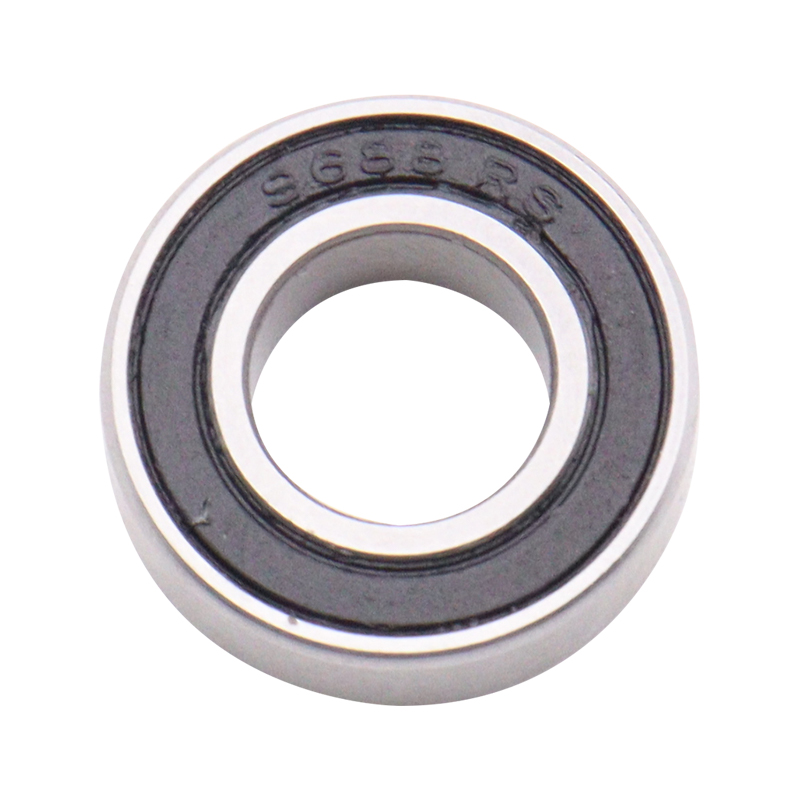
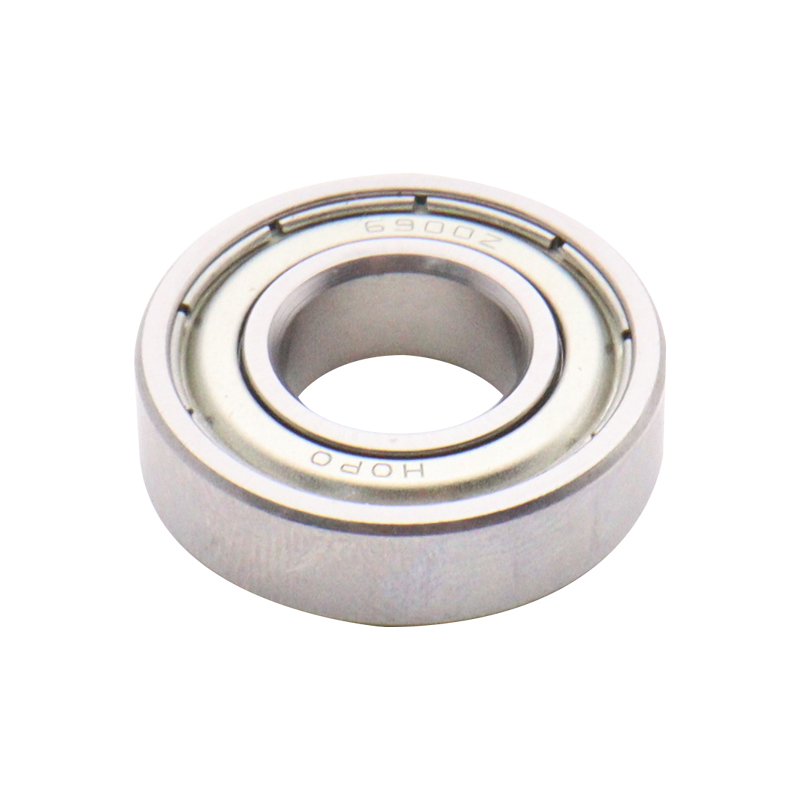
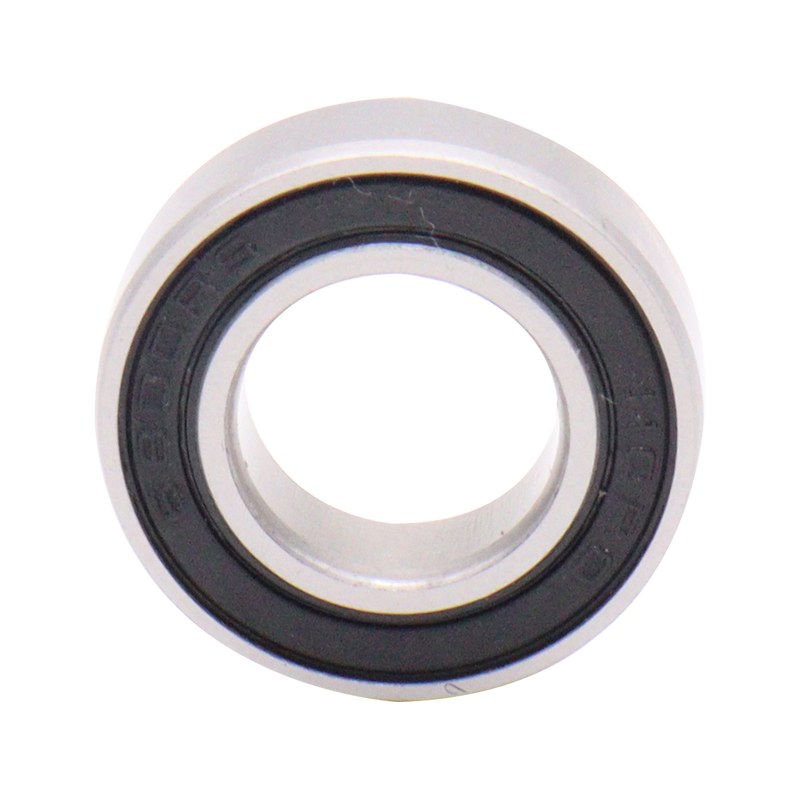
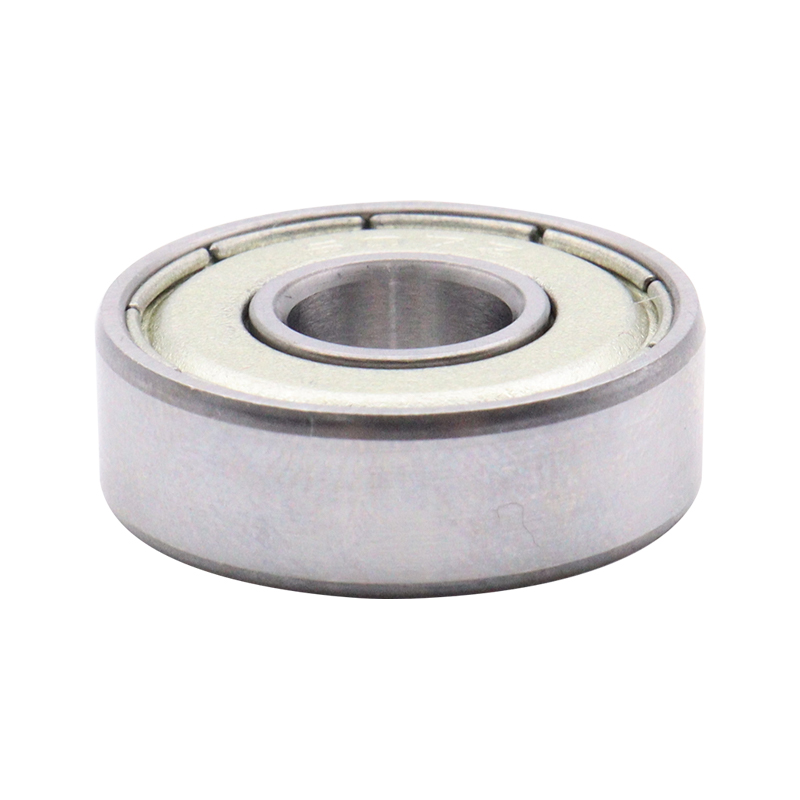
Sealing systems are classified into non-contact shields and contact seals. Metal shields (indicated by suffix Z or ZZ) provide low friction and protect against larger particles, making them well-suited for high speed, clean environments. Contact rubber seals (indicated by suffix RS or 2RS), made from synthetic nitrile rubber or fluoroelastomers, offer positive contact with the inner ring. This provides excellent protection against dust, moisture, and liquid ingress, though it adds frictional torque and lowers the maximum speed rating.
6. Industrial Application Mapping
Selecting the appropriate ball bearing type depends on the mechanical and environmental requirements of the specific industrial application.
6.1 Electric Motors and Generators
Electric motors require bearings that provide quiet operation, low vibration, and minimal energy loss. Deep groove ball bearings with a C3 clearance and high quality grease lubrication are standard. These configurations ensure that the rotor remains centered, minimizing electromagnetic noise and maintaining high efficiency over long periods of continuous operation.
6.2 Centrifugal Pumps and Compressors
Pumps and compressors generate significant combined loads due to fluid dynamics and axial thrust forces. Double row angular contact ball bearings or matched pairs of single row angular contact bearings are typically installed on the thrust side to manage these axial forces. The opposite side of the shaft generally uses a deep groove ball bearing to allow for axial thermal expansion of the shaft.
6.3 Industrial Conveyor Systems
Conveyor systems operate in harsh environments filled with dirt, dust, and moisture. Speed requirements are usually low, but the risk of structural misalignment is high. Self-aligning ball bearings or housed ball bearing units with robust multi-lip contact seals are preferred for these applications. This ensures reliable operation despite structural deflection and heavy contamination.
7. Diagnostics and Failure Analysis
Understanding why bearings fail helps operators optimize machinery and prevent unplanned downtime. Most premature bearing failures are caused by factors other than material fatigue.
7.1 Fatigue Flaking and Spalling
Flaking or spalling appears as the advanced pitting of the raceway tracks and balls. When it occurs at the end of the bearing’s calculated lifespan, it is a normal sign of material fatigue. However, if it occurs prematurely, it indicates excessive loading, inadequate lubricant viscosity, or structural misalignment that forces the balls to ride over the edge of the raceway groove.
7.2 Fretting Corrosion
Fretting corrosion produces a distinct reddish-brown oxide powder on the bore or outer surface of the bearing rings. This condition is caused by micro-movements between the bearing ring and the shaft or housing, which occurs when fit tolerances are too loose. This corrosion weakens the mechanical support, leads to increased vibration, and can cause the bearing ring to crack under heavy loads.
7.3 Electrical Erosion
Electrical erosion occurs when an electric current passes through the bearing, arc-discharging across the thin lubricant film between the balls and the raceway. This creates localized melting, resulting in microscopic craters or a distinctive fluting pattern across the raceway surfaces. This pattern causes severe vibration and noise, necessitating the use of insulated or ceramic hybrid bearings.
FAQs
8.1 What is the primary functional difference between a shield and a seal on a ball bearing?
A shield is a non-contact metallic plate fixed to the outer ring that leaves a small gap relative to the inner ring. It is designed to retain grease and keep out large particles while generating minimal friction, making it ideal for high speed applications. A seal is a flexible rubber or synthetic component that makes direct contact with the inner ring, providing a tight barrier against moisture and fine dust at the cost of increased frictional torque and lower maximum speeds.
8.2 Why does a bearing require a larger C3 internal clearance configuration for electric motors?
Electric motors generate significant heat in the rotor and shaft during operation. This heat conducts directly into the bearing’s inner ring, causing it to expand thermally. A standard internal clearance could be completely taken up by this expansion, leading to internal preloading, overheating, and failure. A C3 clearance provides the necessary extra space to ensure optimal clearance remains once operational temperatures stabilize.
8.3 Can an angular contact ball bearing operate effectively with a pure radial load profile?
No, a single angular contact ball bearing cannot operate under a pure radial load. Because the raceways are displaced at an angle, applying a radial force creates an induced axial force within the bearing. This force will try to separate the inner and outer rings unless it is counteracted by an external axial load or an opposing bearing arranged in a back to back or face to face configuration.
8.4 How do ceramic balls prevent the occurrence of electrical erosion in industrial machinery?
Ceramic balls, typically made from silicon nitride, act as electrical insulators. Unlike steel balls, they do not conduct electricity, which completely blocks stray currents from passing through the bearing from the rotor to the stator. This prevents the spark discharges that cause pitting and fluting on the raceway tracks.
8.5 What specific symptoms indicate that a ball bearing has been mounted with an excessive press fit?
An excessive press fit severely reduces or completely eliminates the bearing’s internal radial clearance. This leads to high running torque, rapid temperature spikes immediately after startup, a loud high-pitched whining noise, and accelerated wear or spalling along the center of the raceway tracks.
References
- Harris, T. A., & Kotzalas, M. N. (2006). Advanced Concepts of Bearing Technology: Rolling Bearing Analysis. CRC Press.
- ISO 281:2007. Rolling Bearings - Dynamic Load Ratings and Rating Life. International Organization for Standardization.
- SKF Group. (2023). Rolling Bearings Catalogue. Technical Publication.
- Nisbet, T. S. (1974). Rolling Bearings. Oxford University Press.
- Eschmann, P., Hasbargen, L., & Weigand, K. (1985). Ball and Roller Bearings: Theory, Design, and Application. John Wiley & Sons.
Selected Bearing Display

 Download Catalog
