 English
 中文简体
中文简体 عربى
عربى
Contact Us




founded in 2006, is an enterprise focusing on the R&D, manufacturing, and customization of non-standard bearings, high-precision bearings (import substitution), and bearing accessories and mechanical parts. With more than 30 years of technical design experience, FTM has earned an excellent reputation in the field of high-quality bearings. Our professional technical team provides domestic and foreign customers with high-quality bearing solutions in engineering machinery, textile machinery, and other fields.
News Directory
- Fundamental Contact Mechanics: Point Contact versus Line Contact
- Deep Groove Ball Bearings
- Angular Contact Ball Bearings
- Cylindrical Roller Bearings
- Tapered Roller Bearings
- Spherical Roller Bearings
- Needle Roller Bearings
- Comparative Performance Analysis
- Bearing Life and Durability Considerations
- Selection Guidelines
- Conclusion
- Frequently Asked Questions
- References
Author: FTM
Date: Jul 19, 2026
Roller Bearings vs. Ball Bearings: A Comprehensive Technical Comparison for Industrial Applications
In the world of mechanical engineering and industrial machinery, the selection of appropriate bearings is fundamental to equipment performance, reliability, and operational longevity. Among the vast array of rolling element bearings available, ball bearings and roller bearings represent the two most widely utilized categories. While both serve the primary function of reducing friction between rotating and stationary components while supporting applied loads, their fundamental design differences create distinctly different performance characteristics, application suitability, and operational limitations.
The critical distinction between these bearing types lies in the geometry of their rolling elements and the resulting contact mechanics with the raceways. Ball bearings utilize spherical rolling elements that create point contact with the raceway surfaces, whereas roller bearings employ cylindrical, tapered, or needle-shaped rolling elements that establish line contact. This seemingly minor geometric difference cascades into substantial variations in load capacity, speed capability, friction characteristics, misalignment tolerance, and overall application suitability.
This comprehensive technical comparison examines the major bearing types within both categories, analyzing their structural characteristics, performance parameters, advantages, limitations, and optimal application environments. The analysis encompasses deep groove ball bearings, angular contact ball bearings, self-aligning ball bearings, cylindrical roller bearings, tapered roller bearings, spherical roller bearings, and needle roller bearings.
Fundamental Contact Mechanics: Point Contact versus Line Contact
The foundational difference between ball and roller bearings originates in the nature of contact between the rolling elements and the raceways. Understanding this distinction is essential for comprehending all subsequent performance differences.
Point Contact in Ball Bearings
Ball bearings feature spherical rolling elements that contact the inner and outer raceways at a single point. Under load, this point elastically deforms into a small elliptical contact area, known as Hertzian point contact. The minimal contact area generates very low rolling resistance, enabling exceptionally high rotational speeds and reduced friction. However, this same characteristic concentrates the applied load over a small surface area, producing high contact stress and limiting the maximum load capacity.
Line Contact in Roller Bearings
Roller bearings utilize cylindrical, tapered, or barrel-shaped rolling elements that establish line contact along the entire length of the roller. This line contact distributes the applied load across a substantially larger surface area, significantly reducing contact stress for any given load. The result is dramatically higher load capacity and greater rigidity. However, the increased contact area generates higher friction, which limits maximum rotational speeds and produces more heat during operation.
Deep Groove Ball Bearings
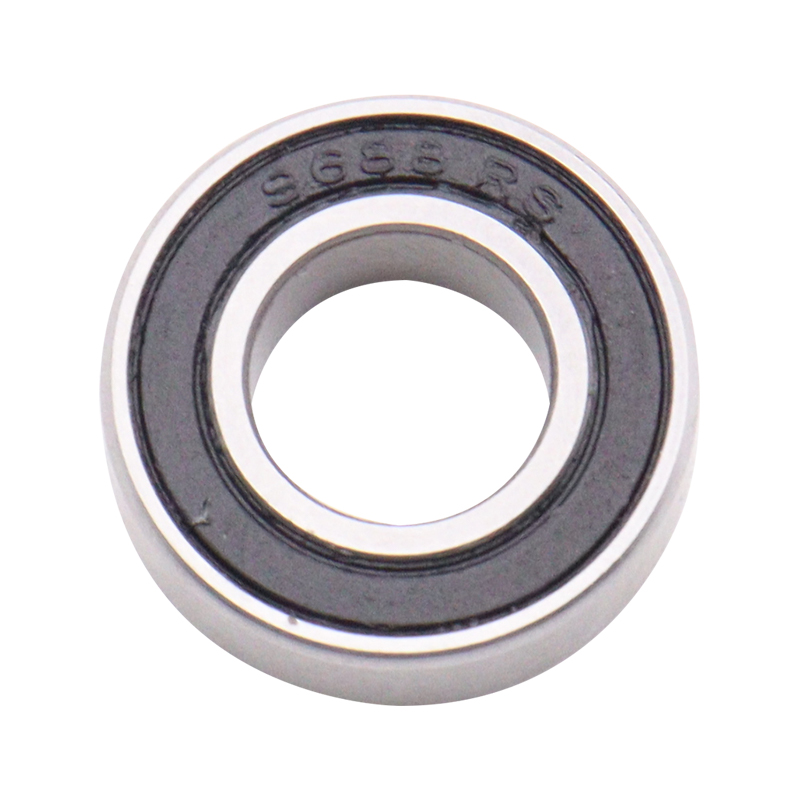
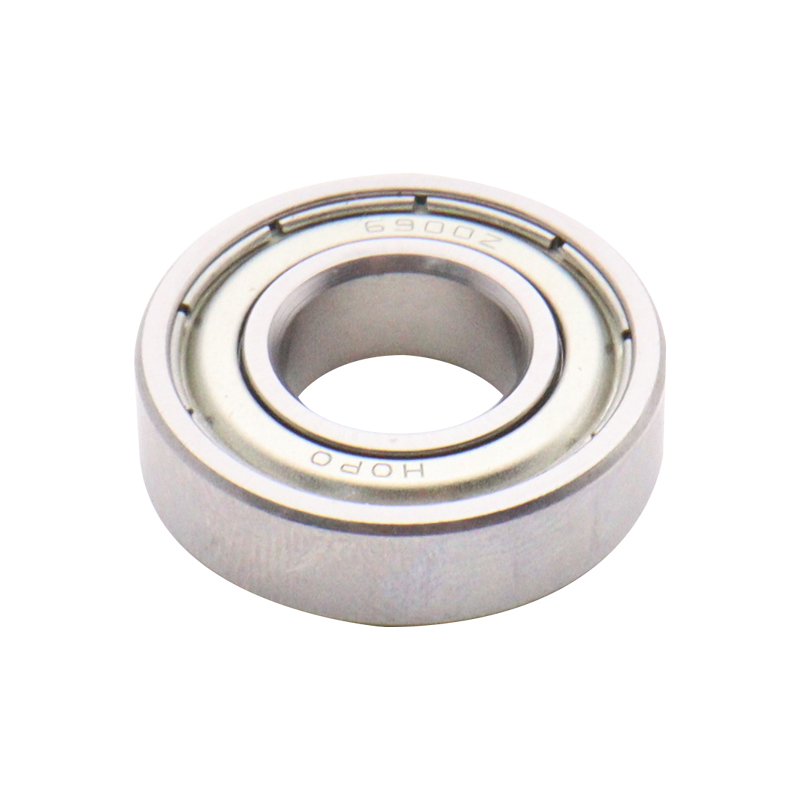
Deep groove ball bearings represent the most common and versatile bearing type in industrial applications. Their simple design features an inner and outer raceway with deep grooves that accommodate spherical balls as rolling elements.
Design and Construction
The deep groove configuration allows the bearing to support both radial and axial loads in either direction. The balls are typically retained by a cage that maintains uniform spacing, reducing friction and heat generation. These bearings are available in a wide range of sizes, from miniature instruments to large industrial applications, with bore diameters ranging from a few millimeters to 400 millimeters.
Performance Characteristics
Deep groove ball bearings offer low friction coefficients, typically in the range of 0.0015, enabling high-speed operation with minimal energy consumption. They operate quietly and smoothly, making them suitable for precision instruments and consumer applications. Their point contact design allows them to accommodate moderate axial loads in both directions, although their axial load capacity is limited compared to specialized bearing types.
Limitations
The primary limitation of deep groove ball bearings is their relatively modest load capacity. For the same external dimensions, roller bearings of various types can support significantly higher loads. Additionally, these bearings have very limited misalignment tolerance, generally requiring alignment within 0.05 to 0.1 degrees for optimal performance.
Typical Applications
Deep groove ball bearings are widely employed in electric motors, pumps, fans, household appliances, automotive components, and precision instruments where high-speed operation and low friction are prioritized over extreme load capacity.
Angular Contact Ball Bearings
Angular contact ball bearings represent a specialized evolution of the ball bearing design, featuring raceways that are offset relative to each other to create a contact angle between the balls and the raceways.
Design and Construction
The contact angle, typically ranging from 15 to 40 degrees, determines the bearing’s ability to support axial loads. Single-row angular contact ball bearings can accommodate axial loads in one direction only and are typically used in pairs or sets to handle bidirectional axial forces. Double-row and four-point contact variants are also available for more demanding applications.
Performance Characteristics
Angular contact ball bearings excel in applications requiring both high speeds and significant axial load capacity. Their contact angle design enables them to support combined radial and axial loads more effectively than deep groove ball bearings. They offer low friction and high precision, making them suitable for machine tool spindles and high-speed automotive applications.
Limitations
While angular contact ball bearings offer superior axial load capacity compared to deep groove ball bearings, their radial load capacity remains inferior to roller bearings of comparable size. They also require precise mounting and preloading to achieve optimal performance.
Typical Applications
These bearings are commonly found in machine tool spindles, automotive wheel hubs, gearboxes, and high-speed precision equipment where both speed and axial load capacity are critical requirements.
Cylindrical Roller Bearings
Cylindrical roller bearings utilize cylindrical rolling elements that establish line contact with the raceways, providing exceptional radial load capacity.
Design and Construction
The cylindrical rollers are typically crowned or end-relieved to reduce stress concentrations at the roller edges. These bearings are available in various designs, including N, NU, NJ, and NUP types, which differ in their flange configurations and axial load capacity. Many cylindrical roller bearings feature separable inner and outer rings, facilitating easier installation and maintenance.
Performance Characteristics
Cylindrical roller bearings offer radial load capacities that are typically 60 percent higher than comparable ball bearings of the same size. They provide high rigidity and excellent resistance to shock and impact loads. Their line contact design distributes loads evenly across a large surface area, enabling them to handle heavy radial loads while maintaining relatively high-speed capabilities. The limiting speed of cylindrical roller bearings is virtually identical to that of deep groove ball bearings of comparable size.
Limitations
Standard cylindrical roller bearings are designed primarily for radial loads and have limited axial load capacity. However, designs with flanges on the inner and outer rings can accommodate moderate axial loads when adequate lubrication is provided.
Typical Applications
Cylindrical roller bearings are extensively used in industrial gearboxes, large electric motors, rolling mills, pumps, compressors, and machine tool spindles where high radial load capacity and rigidity are essential.
Tapered Roller Bearings
Tapered roller bearings feature conically shaped rollers and raceways, enabling them to support combined radial and axial loads with exceptional efficiency.
Design and Construction
The tapered geometry of the rollers and raceways allows the bearing to maintain proper roller alignment even under heavy loads. The bearing consists of a cone (inner ring), a cup (outer ring), tapered rollers, and a cage. The rollers are tapered so that their apexes converge at a common point on the bearing axis, ensuring true rolling motion and minimizing sliding friction.
Performance Characteristics
Tapered roller bearings excel in handling combined radial and axial loads, particularly in one direction. They offer load-carrying capacities significantly higher than ball bearings of the same size, with axial tapered roller bearings achieving up to 40 percent higher load capacity than cylindrical and spherical roller bearings with the same dimensions. Their line contact design provides high rigidity and excellent resistance to shock loads. In demanding applications, tapered roller bearings have demonstrated fatigue life exceeding that of angular contact ball bearings by more than five times.
Limitations
Tapered roller bearings generate higher friction and heat than ball bearings due to their line contact design and sliding components. They also require more precise mounting and adjustment to achieve optimal performance and may necessitate more frequent lubrication and maintenance. Additionally, single-row tapered roller bearings can accommodate axial loads in one direction only and are typically used in matched pairs for bidirectional thrust.
Typical Applications
These bearings are commonly found in automotive wheel hubs, vehicle gearboxes, construction equipment, industrial gearboxes, and heavy-duty machinery where high combined load capacity and reliability are paramount.
Spherical Roller Bearings
Spherical roller bearings represent one of the most versatile roller bearing types, featuring barrel-shaped rollers that operate between an inner ring with two raceways and an outer ring with a spherical raceway.
Design and Construction
The spherical outer raceway allows the bearing to accommodate significant angular misalignment between the shaft and housing. The barrel-shaped rollers provide line contact with both raceways, distributing loads evenly across a large surface area. These bearings are typically available in double-row configurations.
Performance Characteristics
Spherical roller bearings offer the highest load-carrying capacity among all rolling bearing types for a given envelope size. They accommodate heavy radial loads and moderate axial loads in both directions. Their self-aligning capability is exceptional, typically tolerating 0.5 to 2 degrees of angular misalignment depending on the series and size, with some designs accommodating up to 3 degrees. This misalignment tolerance is substantially greater than that of standard ball bearings, which generally require alignment within 0.05 to 0.1 degrees.
Limitations
The primary limitations of spherical roller bearings are their relatively high friction and lower speed capability compared to ball bearings. They are also more expensive and complex than simpler bearing types.
Typical Applications
Spherical roller bearings are extensively used in heavy industrial applications including mining and aggregate processing equipment, power generation systems, wind turbines, gear drives, rolling mills, and conveyors. They are particularly valuable in applications where shaft deflection or misalignment is unavoidable.
Needle Roller Bearings
Needle roller bearings utilize long, thin cylindrical rollers with a high length-to-diameter ratio, typically 3:1 or greater.
Design and Construction
The small diameter of the needle rollers allows these bearings to be extremely compact while maintaining high load capacity. Some designs can be used without inner or outer rings, with the raceways machined directly on the shaft or in the housing, further reducing space requirements.
Performance Characteristics
For the same shaft diameter and radial envelope, a needle roller bearing typically carries 3 to 5 times the radial load of a comparable deep groove ball bearing. In some configurations, needle roller bearings can withstand 2 to 8 times more load than ball bearings or cylindrical roller bearings of the same shaft diameter, all within a very compact space. This exceptional load capacity in a small footprint makes needle roller bearings invaluable in space-constrained applications.
Limitations
Standard needle roller bearings have essentially zero axial load capacity. Applying axial thrust will cause the rollers to skew and the bearing to fail rapidly. They also have lower speed capability than ball bearings and require precise alignment to prevent edge loading.
Typical Applications
Needle roller bearings are used in automotive transmissions, connecting rods, universal joints, and other applications where space is limited but high radial load capacity is required.
Comparative Performance Analysis
Load Capacity Comparison
The following table provides a comparative overview of the load capacity characteristics of various bearing types:
| Bearing Type | Radial Load Capacity | Axial Load Capacity | Combined Load Capacity | Relative Load Rating |
|---|---|---|---|---|
| Deep Groove Ball | Moderate | Moderate (both directions) | Moderate | 1.0x (baseline) |
| Angular Contact Ball | Moderate | High (one direction) | High | 1.2x - 1.5x |
| Cylindrical Roller | Very High | Limited (with flanges) | Low to Moderate | 1.6x - 2.5x |
| Tapered Roller | High | High (one direction) | Very High | 2.0x - 3.0x |
| Spherical Roller | Extremely High | Moderate (both directions) | High | 3.0x - 4.0x |
| Needle Roller | Very High | None | None (radial only) | 3.0x - 5.0x |
Roller bearings in general accommodate heavier loads than same-sized ball bearings. Full complement roller bearings, which lack cages, accommodate even heavier loads than caged versions. The load capacity hierarchy among rolling bearings generally follows: deep groove ball bearings are lowest, followed by angular contact ball bearings, cylindrical roller bearings, tapered roller bearings, and spherical roller bearings at the highest end.
Speed Capability Comparison
Ball bearings generally offer superior speed capability compared to roller bearings. The point contact design of ball bearings generates minimal friction and heat, enabling rotational speeds that roller bearings cannot achieve. Among roller bearings, cylindrical roller bearings offer the highest speed capability due to their precision cages and optimized geometry. Needle roller bearings typically have the lowest speed limits due to their small roller diameters and higher friction characteristics.
Friction Characteristics
Ball bearings exhibit lower friction coefficients than roller bearings. Deep groove ball bearings typically have friction coefficients around 0.0015, while cylindrical roller bearings range from 0.0011 to 0.0018, and tapered roller bearings around 0.0018. The lower friction of ball bearings translates to reduced energy consumption and lower operating temperatures.
Misalignment Tolerance
Spherical roller bearings offer the greatest misalignment tolerance, typically accommodating 0.5 to 2 degrees of angular misalignment. Self-aligning ball bearings provide a middle ground with approximately 3 degrees of allowable misalignment. Standard deep groove ball bearings have the strictest alignment requirements, generally needing alignment within 0.05 to 0.1 degrees. Cylindrical and tapered roller bearings have intermediate misalignment tolerance but are generally more sensitive to misalignment than ball bearings due to their line contact requiring roller axis parallelism to the raceway.
Stiffness and Rigidity
Roller bearings provide higher stiffness and rigidity than ball bearings due to their line contact and larger contact area. This makes roller bearings particularly suitable for applications involving fluctuating and surge loads where dimensional stability is critical. Tapered roller bearings offer particularly high stiffness, with axial stiffness potentially doubling and radial stiffness potentially tripling compared to angular contact ball bearings.
Bearing Life and Durability Considerations
Bearing life is typically calculated using the L10 life method, which represents the life that 90 percent of a bearing population can be expected to achieve or exceed. The life calculation exponent differs between bearing types, with ball bearings using an exponent of 3 and roller bearings using an exponent of 10/3.
Roller bearings generally offer longer service life than ball bearings under equivalent load conditions due to their lower contact stress and better load distribution. However, this advantage depends heavily on proper lubrication, alignment, and operating conditions. Tapered roller bearings, in particular, have demonstrated exceptional fatigue life performance, with some studies showing over five times the life of angular contact ball bearings under wheel bearing load conditions.
Selection Guidelines
The selection between ball bearings and roller bearings should be guided by the following considerations:
Choose Ball Bearings When:
- High rotational speeds are required
- Loads are light to moderate
- Low friction and energy efficiency are priorities
- Quiet operation is important
- Both radial and axial loads must be accommodated in a simple, cost-effective design
- Precision and accuracy are critical
Choose Roller Bearings When:
- Heavy radial loads must be supported
- High rigidity and stiffness are required
- Shock and impact loads are present
- Space constraints limit bearing envelope size (particularly for needle bearings)
- Shaft deflection or misalignment is expected (particularly for spherical roller bearings)
- Long service life under heavy loads is required
Conclusion
The distinction between ball bearings and roller bearings is fundamentally rooted in the geometry of their rolling elements and the resulting contact mechanics. Ball bearings utilize point contact to achieve low friction, high speeds, and versatility in handling both radial and axial loads, making them ideal for a wide range of applications from precision instruments to electric motors. Roller bearings employ line contact to achieve superior load capacity, greater rigidity, and enhanced durability, making them essential for heavy industrial applications where reliability under extreme conditions is paramount.
Within each category, specialized variants offer optimized performance for specific requirements. Deep groove ball bearings provide versatility and simplicity, angular contact ball bearings excel in high-speed axial load applications, cylindrical roller bearings offer exceptional radial load capacity, tapered roller bearings provide superior combined load handling, spherical roller bearings accommodate misalignment while supporting heavy loads, and needle roller bearings deliver remarkable load capacity in minimal space.
Understanding these differences enables engineers and procurement professionals to select the optimal bearing type for their specific application requirements, ensuring maximum equipment performance, reliability, and service life.
Frequently Asked Questions
Q1: What is the primary difference between ball bearings and roller bearings?
The primary difference lies in the contact geometry between the rolling elements and the raceways. Ball bearings use spherical elements that create point contact, while roller bearings use cylindrical, tapered, or barrel-shaped elements that create line contact. This fundamental distinction determines all subsequent performance differences in load capacity, speed capability, friction, and application suitability.
Q2: Which bearing type offers higher load capacity for the same size?
Roller bearings generally offer significantly higher load capacity than ball bearings of the same size. For example, needle roller bearings can carry 3 to 5 times the radial load of comparable deep groove ball bearings, while cylindrical roller bearings typically offer 60 percent higher load ratings than ball bearings of equivalent dimensions.
Q3: When should I choose ball bearings over roller bearings?
Ball bearings should be chosen when high rotational speeds, low friction, quiet operation, and the ability to handle both radial and axial loads in a compact, cost-effective design are priorities. They are ideal for applications such as electric motors, pumps, fans, household appliances, and precision instruments where loads are light to moderate and speed is important.
Q4: Which bearing type is best for applications with shaft misalignment?
Spherical roller bearings offer the greatest misalignment tolerance, typically accommodating 0.5 to 2 degrees of angular misalignment depending on the series and size. Self-aligning ball bearings can tolerate approximately 3 degrees. Standard deep groove ball bearings have very limited misalignment tolerance, generally requiring alignment within 0.05 to 0.1 degrees.
Q5: Can roller bearings handle axial loads?
The ability to handle axial loads varies by roller bearing type. Cylindrical roller bearings with flanges on the rings can accommodate moderate axial loads with adequate lubrication. Tapered roller bearings excel at handling combined radial and axial loads in one direction. Spherical roller bearings can accommodate moderate axial loads in both directions. However, standard needle roller bearings have essentially zero axial load capacity.
References
-
BTL-UK. “Ball Bearings vs Roller Bearings: Differences, Load Capacity and Applications.” BTL-UK Blog, 2026.
-
Lily-Bearing. “Needle Bearings VS Ball Bearings.” Lily-Bearing Resources, 2025.
-
TFL Bearing. “Cylindrical Roller Bearings vs. Ball Bearings.” TFL Bearing Blog, 2026.
-
UQG Bearing. “What is the Difference Between a Deep Groove Ball Bearing and a Tapered Roller Bearing?” UQG Bearing News, 2024.
-
NYZ Bearing. “A Comprehensive Guide to Bearing Misalignment.” NYZ Bearing, 2025.
-
SKF. “Selection Criteria.” SKF Product Documentation.
-
Brookes Bell. “Selection of Rolling Bearings.” Brookes Bell Technical Documentation.
-
Wanda Bearing. “Angular Contact Ball Bearings vs. Cylindrical Roller Bearings: Speed and Load Capacity Comparison.” Wanda Bearing News, 2024.
-
IBT Industrial Solutions. “Ball Bearings vs. Roller Bearings: What are the Key Differences?” IBT Inc., 2022.
-
GlobalSpec. “Specialty Rotary Bearings Selection Guide.” GlobalSpec Engineering360.
Selected Bearing Display
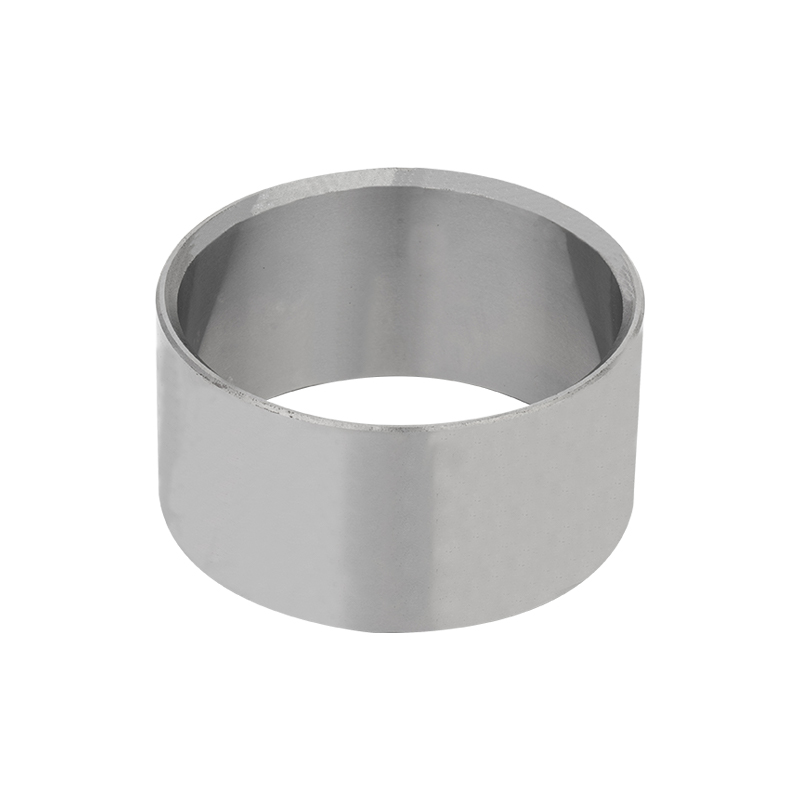
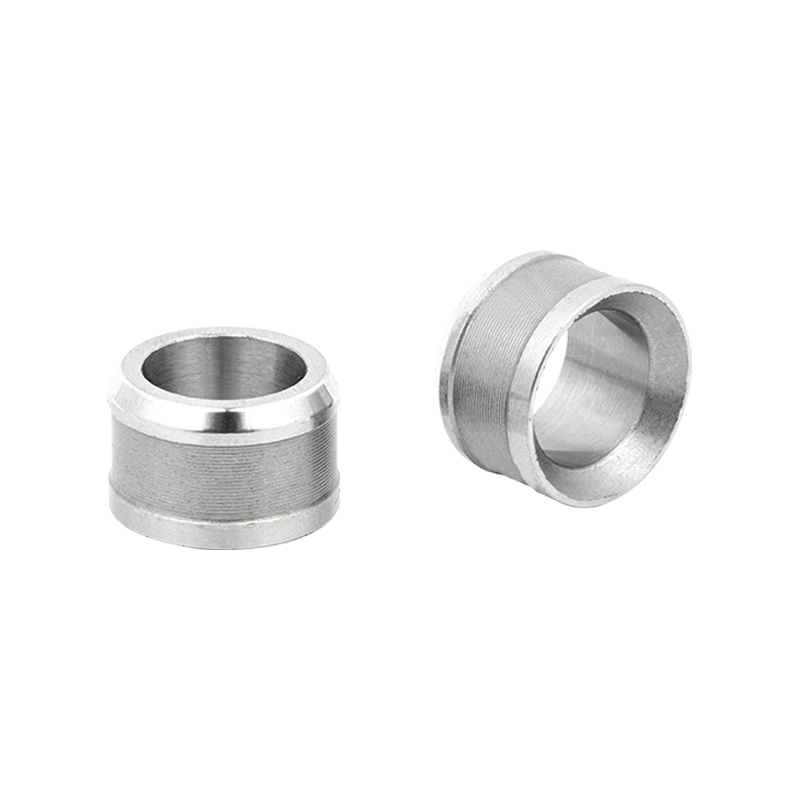
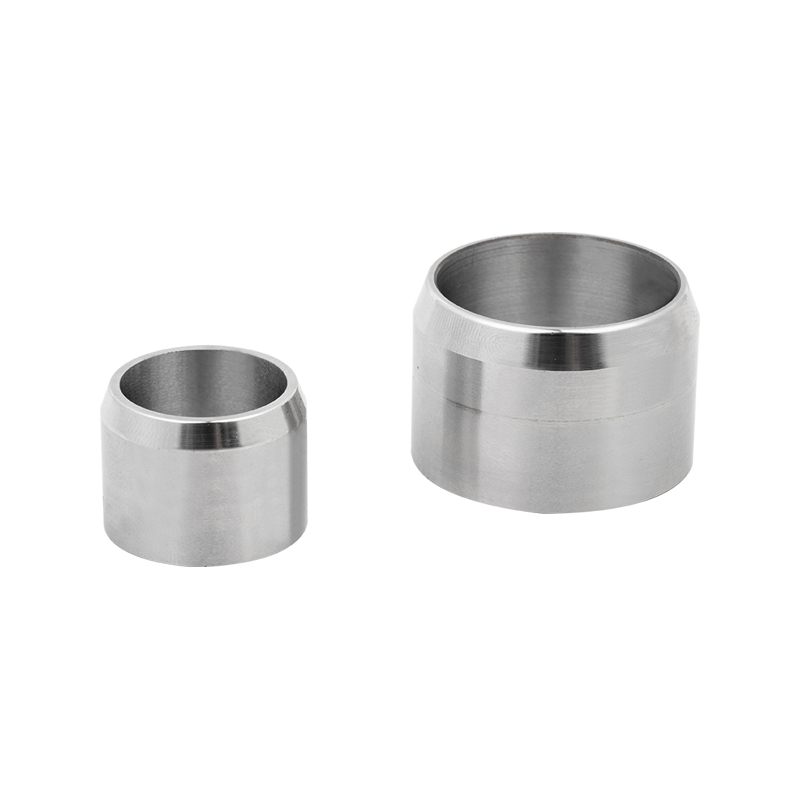
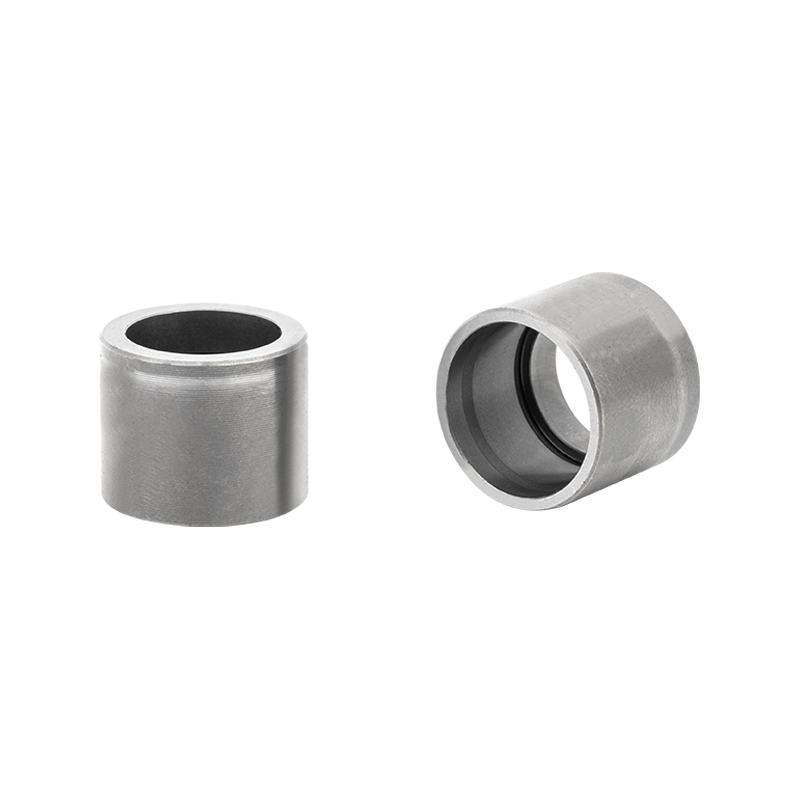

 Download Catalog
