 English
 中文简体
中文简体 عربى
عربى
Contact Us




founded in 2006, is an enterprise focusing on the R&D, manufacturing, and customization of non-standard bearings, high-precision bearings (import substitution), and bearing accessories and mechanical parts. With more than 30 years of technical design experience, FTM has earned an excellent reputation in the field of high-quality bearings. Our professional technical team provides domestic and foreign customers with high-quality bearing solutions in engineering machinery, textile machinery, and other fields.
News Directory
- I. Introduction: The “Perfect Fit” Dilemma
- II. When “Standard” Falls Short: 4 Key Scenarios for Customization
- III. The Advantages of Non-Standard Bearings: More Than Just a Fit
- IV. Considerations: Cost, Lead Time, and Engineering Reality
- V. How to Start Your Customization Journey
- VI. Conclusion: Don’t Settle for “Close Enough”
- Frequently Asked Questions (FAQ)
- References
Author: FTM
Date: Jan 16, 2026
Standard vs. Non-Standard Bearings: When Does Your Application Require Customization?
I. Introduction: The “Perfect Fit” Dilemma
When you start a new mechanical design project, the first thing you probably do is reach for a manufacturer’s catalog. It’s the safe bet, right? You look for a part number that matches your shaft size, check the load ratings, and move on. For many projects, these Standard Bearings—the ones built to universal international specs like ISO or DIN—work just fine. They are the “off-the-rack” suits of the engineering world.
But here is the reality: Innovation doesn’t always follow a catalog.
Maybe you are designing a drone that needs to be incredibly light, or a food-processing machine that operates under high-pressure steam. Suddenly, that standard bearing feels like trying to put a square peg in a round hole. It’s a bit too heavy, or it rusts too fast, or it just doesn’t fit the tight space you have left.
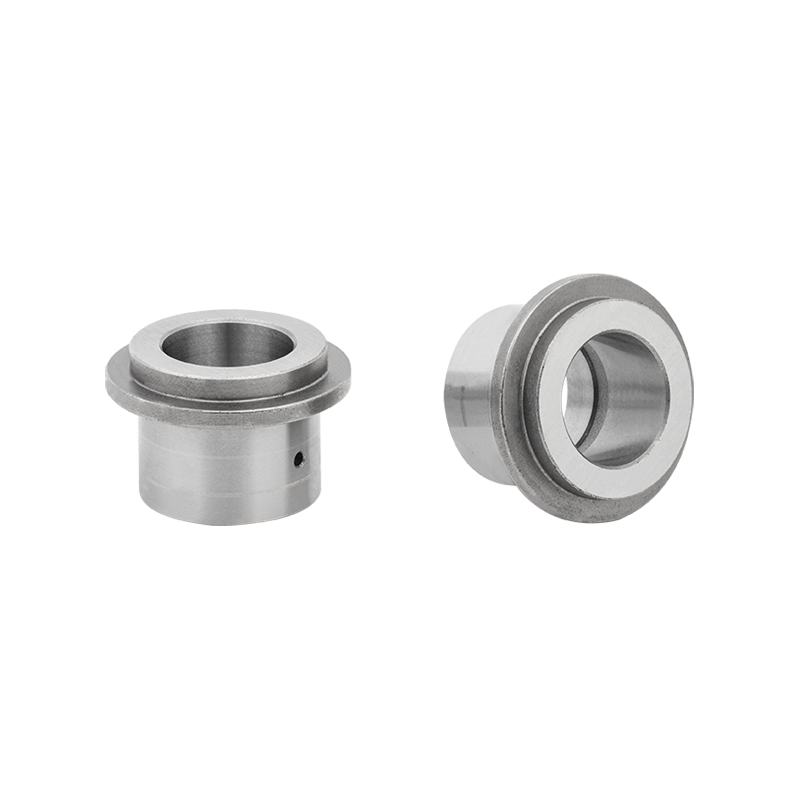
This is where Non-Standard Bearings come into play. These are the tailor-made solutions designed specifically for your machine’s unique DNA. Whether it’s a ball bearing with a custom outer ring or a roller bearing made from specialized materials, customization is about one thing: Performance without compromise.
In this guide, we are going to look at the “Standard vs. Non-Standard” debate. We will help you figure out when the catalog is your friend and when it is time to stop settling for “good enough” and start looking for a custom-engineered solution that gives your product a competitive edge.
II. When “Standard” Falls Short: 4 Key Scenarios for Customization
In an ideal world, every design would fit a standard part. But in the real world of high-performance machinery, “standard” can sometimes be your biggest limitation. If you find yourself facing any of these four challenges, it is a clear sign that a custom-engineered bearing is the better path forward.
1. Geometric Constraints (Space and Weight)
Modern engineering is all about doing more with less. If you are designing a robotic joint or a compact electronic device, every millimeter of space is precious. Sometimes, a standard bearing is simply too bulky or too heavy. Customizing the bearing—such as using a thin-section design or even integrating the bearing housing directly into your machine part—can save significant space and reduce the overall weight of your product.
2. Extreme Environmental Conditions
Standard chrome steel bearings are great for “normal” conditions. But what if your machine lives in a world of salt spray, acidic chemicals, or temperatures that would melt a typical seal?
- Corrosion: Standard bearings rust. Custom bearings use stainless steel or ceramic materials to survive.
- Heat: Standard grease breaks down at high temperatures. Custom solutions utilize high-temp alloys and specialized lubricants.
3. Exceptional Load and Speed Requirements
Sometimes a machine needs to spin faster than a jet turbine, or it needs to carry a heavy load at a very strange angle. A standard deep-groove ball bearing might survive for a few days, but it won’t last. Customization allows us to tweak the internal geometry—changing the ball size, the number of rollers, or the cage material—to ensure the bearing handles the stress without breaking a sweat.
4. Precision and Low Noise Demands
In industries like medical imaging (CT scanners) or high-end audio equipment, “quiet” isn’t just a preference—it’s a requirement. Standard production tolerances might allow for tiny vibrations that create noise. A non-standard, precision-ground bearing can be manufactured to much tighter tolerances to ensure near-silent operation and ultra-smooth motion.
Comparison at a Glance
| Challenge | Standard Bearing Result | Custom Non-Standard Solution |
|---|---|---|
| Tight Spaces | Forced to make the machine larger | Slim, integrated design fits the space |
| High Heat | Early failure, melted seals | High-temp alloys and specialized grease |
| Heavy Vibration | Noisy operation, short lifespan | Precision-ground parts for silent motion |
| Chemical Exposure | Rust and contamination | Corrosion-resistant materials (Ceramic/SS) |
III. The Advantages of Non-Standard Bearings: More Than Just a Fit
Choosing a non-standard bearing isn’t just about solving a problem; it’s about making your entire product better. When you stop trying to force a standard part to work, you open up several competitive advantages.
Seamless Integration
One of the coolest things about non-standard bearings is that we can combine multiple parts into one. For example, instead of having a bearing, a separate flange, and a gear, we can manufacture a bearing that has the flange and gear teeth built right into the rings. This means fewer parts for you to buy, fewer parts for your team to assemble, and fewer things that can go wrong.
Optimized Service Life
Every machine has its own “personality”—specific vibrations, heat patterns, and duty cycles. Standard bearings are “averaged” to work okay in most places. Custom bearings are “tuned” for your specific machine. We can adjust the internal clearances—the tiny gaps between the balls and the rings—to account for how much the metal will expand when your machine gets hot. This precision leads to a much longer lifespan and fewer maintenance headaches for your customers.
Brand Differentiation and After-Market Protection
If you are an Original Equipment Manufacturer (OEM), using a custom bearing can actually help your business grow. Because the bearing is designed specifically for your machine, it ensures that the performance remains high throughout its life. It also means that when it eventually does need a replacement, your customers will come back to you for the genuine, high-quality custom part rather than buying a cheap, generic alternative that might damage the machine.
Benefits Breakdown
| Benefit | What it means for you |
|---|---|
| Part Reduction | Lower assembly costs and simpler inventory. |
| Better Tuning | Reduced noise and vibration specific to your application. |
| Reliability | Fewer warranty claims and “dead-on-arrival” parts. |
| Exclusivity | Protects your design and ensures long-term part quality. |
IV. Considerations: Cost, Lead Time, and Engineering Reality
Let’s be honest: if standard bearings worked for every situation, non-standard bearings wouldn’t exist. Choosing the custom route is a strategic decision, and like any good business move, it requires weighing the pros and cons. Here is what you need to keep in mind.
The Investment vs. The Price Tag
When you look at a quote for a non-standard bearing, the unit price will likely be higher than a mass-produced standard part. Why? Because you aren’t just paying for steel and grease; you are paying for engineering expertise, specialized tooling, and a production line that has been calibrated specifically for your project.
However, savvy managers look at the Total Cost of Ownership (TCO). If a standard bearing costs $10 but fails every three months, and a custom bearing costs $30 but lasts three years, the custom option is actually much cheaper in the long run.
Lead Times: Planning Ahead
You can usually get a standard bearing delivered by tomorrow. Custom bearings take time to perfect. From design and prototyping to heat treatment and final precision grinding, the process can take several weeks.
- Pro Tip: At Feite Machinery, we recommend starting the conversation during your early design phase. This allows us to sync our production with your product launch timeline.
The Question of Quantity (MOQ)
A common myth is that you need to order 10,000 pieces to get a custom bearing. While large volumes do lower the price, many modern manufacturers (including us!) are becoming much more flexible. We often work with clients on smaller batches for specialized machinery or prototype testing.
Quick Comparison: Standard vs. Custom
| Factor | Standard Catalog Bearing | Custom Non-Standard Bearing |
|---|---|---|
| Upfront Cost | Lower (Mass-produced) | Higher (Tailor-made) |
| Availability | Immediate / Off-the-shelf | Built-to-order (Requires lead time) |
| Efficiency | General performance | Optimized for your specific machine |
| Maintenance | More frequent replacements | Lower “Cost of Failure” and longer life |
The “Cost of Failure” Checklist
Before you decide, ask yourself:
- What does one hour of machine downtime cost my customer?
- How much does it cost me to send a technician to replace a failed bearing in the field?
- Will a standard bearing limit the “advertised performance” of my new design?
If the cost of failure or limited performance is high, the “higher” price of a custom bearing is actually your best insurance policy.
V. How to Start Your Customization Journey
Starting a custom bearing project might feel overwhelming, but it is actually a very collaborative and exciting process. You don’t need to be a bearing expert—that is what we are here for. Here is how the journey usually looks:
- The Technical Consultation: This is where we talk shop. You tell us about your machine—how fast it spins, how much weight it carries, and what kind of environment it lives in. If you have a blueprint or a 3D model, that is the perfect starting point.
- Design & Prototyping: Our engineers will propose a design tailored to your needs. Before we go into full production, we often create a prototype. This allows you to test the part in your actual machine to ensure every clearance and tolerance is spot on.
- Quality Validation: At Feite Machinery, we don’t just “make” it; we verify it. From material testing to final precision checks, we ensure the non-standard part meets the high standards your brand promises to its customers.
VI. Conclusion: Don’t Settle for “Close Enough”
In the world of precision engineering, the difference between a machine that lasts for years and one that fails in months often comes down to the smallest component: the bearing.
Standard bearings are fantastic for standard problems. But if you are pushing the boundaries of what your equipment can do—whether it is making it smaller, faster, or tougher—you deserve a component that works as hard as your design does.
Choosing a Non-Standard Bearing is an investment in your product’s reputation. It’s about reducing downtime, eliminating compromises, and giving your customers a machine they can rely on.
Final Thought from Feite Machinery
Still not sure if your application needs a custom touch? Let’s find out together. Our team at Shaoxing Shangyu Feite Machinery specializes in bringing precision and reliability to non-standard ball and roller bearings.
Ready to elevate your design? Contact our engineering team today for a technical review. Let’s build something that fits your vision perfectly.
Frequently Asked Questions (FAQ)
1. Are non-standard bearings always more expensive than standard ones?
Not necessarily in the long run! While the initial purchase price per unit is usually higher due to custom engineering and tooling, non-standard bearings can save you money by reducing the need for extra housing parts, simplifying assembly, and lasting much longer. When you factor in the reduced maintenance and downtime, they are often the more economical choice.
2. What is the typical lead time for a custom bearing order?
Because we are building these from scratch to your specific needs, lead times are longer than off-the-shelf parts. Usually, it takes anywhere from 4 to 8 weeks depending on the complexity of the design and the materials required. We always recommend involving us early in your design phase to keep your project on schedule.
3. Do I need to provide a professional blueprint for a custom order?
It helps, but don’t worry if you don’t have one yet! We can start with your machine’s operating requirements—like load, speed, and dimensions. Our engineering team at Feite Machinery can work with you to develop the technical drawings and specifications needed for production.
4. What is the Minimum Order Quantity (MOQ) for non-standard bearings?
This is a common concern. While mass-producers might require thousands of units, we specialize in flexibility. We can often support smaller batches for specialized industrial equipment or provide prototypes for testing before you commit to a larger production run.
5. Can you customize the material of the bearing for extreme environments?
Absolutely. That is one of the biggest reasons customers come to us. We can use stainless steel for moisture resistance, ceramic balls for high-speed or electrical insulation, and special coatings to prevent corrosion in harsh chemical environments.
References
- ISO 15:2017 – Rolling bearings — Radial bearings — Boundary dimensions, general plan. (The global standard that defines what a “standard” bearing is).
- American Bearing Manufacturers Association (ABMA) – Guidelines for Bearing Life and Selection. (A great resource for understanding load and fatigue life).
- The Society of Tribologists and Lubrication Engineers (STLE) – Advancements in Bearing Materials and Coatings for Extreme Environments.
- Journal of Mechanical Design – Integration of Bearings into Machine Elements for Space-Saving Design.
- Feite Machinery Internal Technical Archive – *Case Studies on Non-Standard Bearing Failure Analysis and Custom Solution Performance.
Selected Bearing Display

 Download Catalog
