 English
 中文简体
中文简体 عربى
عربى
Contact Us




founded in 2006, is an enterprise focusing on the R&D, manufacturing, and customization of non-standard bearings, high-precision bearings (import substitution), and bearing accessories and mechanical parts. With more than 30 years of technical design experience, FTM has earned an excellent reputation in the field of high-quality bearings. Our professional technical team provides domestic and foreign customers with high-quality bearing solutions in engineering machinery, textile machinery, and other fields.
News Directory
- Introduction to Rolling Element Bearings in Industrial Machinery
- Geometric Configurations and Structural Variations
- Internal Load Dynamics and Distribution Mechanisms
- Single vs Multiple Row Arrangements and Preloading
- Speed Capabilities and Lubrication Performance
- Material Selection and Advanced Cage Designs
- Comprehensive Selection Matrix for Industrial Applications
- Real World Industrial Case Studies
- Environmental Considerations, Sealing, and Maintenance
- Engineering Conclusion for Strategic Sourcing
- FAQ (Frequently Asked Questions)
- 1. Can a deep groove ball bearing completely replace an angular contact ball bearing?
- 2. Why are angular contact ball bearings typically mounted in pairs or combinations?
- 3. How does the contact angle affect the performance of an angular contact ball bearing?
- 4. What are the visible physical differences between these two types of ball bearings?
- 5. What are the primary indicators that a ball bearing is failing due to incorrect load selection?
- References
Author: FTM
Date: May 24, 2026
Deep Groove vs Angular Contact: Engineering Guide for Ball Bearing Selection
Introduction to Rolling Element Bearings in Industrial Machinery
In the world of rotary motion and power transmission, ball bearings serve as critical components that reduce friction and support mechanical loads. These precision-engineered components are found in almost every rotating machine, from micro electric motors to heavy duty industrial gearboxes. While all ball bearings operate on the same basic principle of rolling elements rolling between inner and outer rings, their internal geometries differ significantly. These geometric variations fundamentally alter how a bearing handles mechanical stresses, manages operational speeds, and performs over a long service lifespan. For international procurement managers, mechanical design engineers, and technical distributors, understanding these subtle but profound differences is essential to ensuring equipment reliability and system efficiency.
The two most widely utilized subcategories of rolling element bearings are single row deep groove ball bearings and angular contact ball bearings. Choosing between these two designs is not merely a matter of dimensional compliance, but rather a complex engineering decision based on load distribution, speed requirements, installation space, and environmental factors. A mismatch between the selected bearing design and the actual operational parameters of the machinery can lead to premature components failure, unexpected downtime, and increased maintenance costs. This comprehensive engineering guide provides an exhaustive comparison of deep groove and angular contact designs, breaking down their geometry, load dynamics, speed limits, cage designs, and practical application environments.
Geometric Configurations and Structural Variations
To comprehend the functional performance differences between deep groove ball bearings and angular contact ball bearings, one must first examine their structural architecture. The fundamental variance lies within the design of the raceway shoulders and the contact line formed between the rolling balls and the steel rings.
Single row deep groove ball bearings feature continuous, uninterrupted raceway grooves on both the inner and outer rings. The shoulders on both sides of these grooves are identical in height. This symmetric configuration ensures that the rolling elements are securely contained within the center of the raceways. The design allows the bearing to accept radial forces directed perpendicularly to the shaft axis, while also maintaining a modest capability to withstand axial thrust forces in either direction. The internal clearance within a standard deep groove bearing is radial, meaning there is a tiny amount of loose play between the balls and the raceway before installation, which accommodates thermal expansion of components during operation.
In stark contrast, angular contact ball bearings are deliberately asymmetric. One shoulder of the raceway on either the inner or outer ring is cut away or significantly lowered compared to the opposite side. This unique architectural feature creates an asymmetric cross section, allowing the bearing to be assembled with a higher number of balls or larger diameter balls than a standard deep groove bearing of the same envelope dimensions. More importantly, this asymmetry defines a specific contact angle. The contact angle is formed between the line connecting the contact points of the ball and the raceways in the radial plane, and a line perpendicular to the bearing axis. Because of this angle, the internal forces are transmitted from one raceway to the other along a distinct diagonal vector, making the component uniquely suited for combined loads.
Internal Load Dynamics and Distribution Mechanisms
The primary factor dictating the choice between deep groove and angular contact ball bearings is the nature and direction of the load that the mechanical system exerts during operation. In industrial settings, loads are categorized as pure radial loads, pure axial thrust loads, or combined loads which contain both radial and axial components.
Deep groove ball bearings excel primarily in applications dominated by radial forces. When a radial load is applied, the force vector passes straight through the center of the rolling elements, distributing the weight evenly across the bottom arc of the bearing raceways. However, because the raceways are deep and continuous, these bearings can also handle a degree of axial load. When an axial force is introduced, the balls ride slightly up the sides of the raceway walls, changing the contact dynamic. While this adaptability makes deep groove bearings incredibly versatile, excessive axial force will cause stress concentrations on the edges of the shoulders, leading to friction spikes, heat generation, and accelerated fatigue. Therefore, deep groove bearings are best limited to systems where the axial force does not exceed a small percentage of the rated radial capacity.
Angular contact ball bearings are specifically engineered to conquer combined load scenarios where heavy axial forces are present. The internal contact angle, typically ranging from fifteen degrees to forty degrees depending on the specific model design, determines the ratio of radial to axial load the bearing can support. A larger contact angle means the bearing can handle a much higher axial load, though its radial capacity becomes slightly compromised. When a radial force acts upon an angular contact bearing, an induced internal axial force is automatically generated due to the angled raceways. To counteract this induced force, angular contact ball bearings are almost never used in isolation as single row components; instead, they must be counterbalanced by a second bearing or arranged in preloaded pairs.
Single vs Multiple Row Arrangements and Preloading
Because of their symmetrical nature, deep groove ball bearings are completely self contained. A single row deep groove bearing can support radial loads independently and lock a shaft axially in both directions within its clear play boundaries. This simplifies housing designs and reduces assembly complexity, as a typical shaft can be supported by one deep groove bearing on the fixed end and another on the floating end to accommodate thermal changes.
Conversely, single row angular contact ball bearings can only support axial forces acting in a single direction. If a force pushes from the opposite direction, the unlipped shoulder will allow the bearing to separate, causing immediate mechanical failure. To resolve this limitation, industrial applications utilize specific arrangement configurations or double row angular contact designs. When mounting two single row angular contact bearings together, engineers choose from three standard mounting configurations:
- Back to Back Arrangement: The load lines diverge toward the bearing axis. This setup provides a high degree of structural rigidity and can handle tilting moments effectively, making it perfect for machine tool spindles.
- Face to Face Arrangement: The load lines converge toward the bearing axis. This configuration is less rigid against tilting moments but is more forgiving of slight misalignment between the shaft and housing.
- Tandem Arrangement: The load lines run parallel to one another. This orientation shares the axial workload equally across both bearings, doubling the thrust capacity in a single direction.
To maximize precision and rigidity while eliminating internal clearance entirely, angular contact arrangements are frequently subjected to a process called preloading. Preloading involves applying a permanent axial force to the bearings during assembly. This forces the rolling balls into constant contact with the raceways, removing all mechanical play, preventing ball skidding during rapid acceleration, and drastically increasing the geometric running accuracy of the shaft.
Speed Capabilities and Lubrication Performance
Rotational speed, measured in revolutions per minute, is a key determinant in bearing selection. High speeds generate friction, which transforms into heat. If a bearing cannot dissipate this heat or minimizes its generation, the lubricant will break down, leading to rapid component seizure.
Deep groove ball bearings are inherently capable of operating at very high speeds. Because they feature low frictional torque during normal operation, they do not generate excessive heat when properly lubricated. The balls roll smoothly along the center of the symmetric raceway tracks. In applications requiring miniature deep groove bearings, such as small dental drills or high speed fans, speeds can reach tens of thousands of revolutions per minute without compromising structural stability.
Angular contact ball bearings are also capable of outstanding high speed performance, particularly when configured with smaller contact angles, such as fifteen degrees. In fact, high precision angular contact bearings are the industry standard for high speed CNC machine spindles. However, at extreme speeds, centrifugal forces act heavily upon the rolling balls. These centrifugal forces try to push the balls outward, which alters the contact angles on the inner and outer raceways simultaneously. This phenomenon, known as contact angle divergence, can increase friction and heat. To combat this, high speed angular contact bearings often utilize specialized internal designs, lightweight ceramic balls, and continuous oil mist or oil air lubrication systems rather than standard industrial grease.
Material Selection and Advanced Cage Designs
The performance of any ball bearing is fundamentally bound to the quality of its manufacturing materials and the engineering design of its cage, also known as the retainer. The cage separates the rolling elements, preventing them from rubbing against each other and ensuring uniform load distribution.
The inner rings, outer rings, and rolling balls of standard industrial deep groove and angular contact bearings are typically manufactured from high carbon chromium steel, such as AISI 52100 or equivalent global standards. This material undergoes meticulous heat treatment to achieve high hardness and wear resistance. For corrosive environments, such as chemical processing plants or marine applications, martensitic stainless steels are utilized, though they offer a slightly lower load rating than standard chrome steel. In high performance scenarios, ceramic elements made of silicon nitride are paired with steel rings to create hybrid ball bearings. Hybrid bearings offer excellent electrical insulation, lower weight, and dramatically reduced centrifugal forces at high speeds.
Cage designs vary broadly across both bearing series and directly impact speed ratings and temperature tolerances. The following table provides an analysis of standard cage materials and their respective operating characteristics:
| Cage Material Type | Manufacturing Method | Primary Advantages | Common Limitations | Typical Applications |
|---|---|---|---|---|
| Pressed Steel | Stamped and riveted from sheet metal | Low production cost, excellent temperature resistance, high availability | Higher weight, prone to friction at extreme speeds | Standard deep groove bearings, general machinery |
| Machined Brass | Precision machined from solid brass castings | Superior strength, excellent natural lubricity, dampens vibration | Higher overall weight, increased initial component cost | Large industrial bearings, heavy duty pumps, compressors |
| Polyamide Resin | Injection molded nylon with glass fiber reinforcement | Lightweight, quiet operation, very low friction coefficient | Limited to temperatures below one hundred and twenty degrees | Electric motors, household appliances, high speed spindles |
| Phenolic Laminate | Machined from fabric reinforced phenolic resin | Ultra lightweight, retains oil within porous structure, perfect for high RPM | Brittle at high impacts, costly customization | High precision angular contact spindle bearings |
Comprehensive Selection Matrix for Industrial Applications
To assist technical buyers and application engineers in making an informed choice between these two premier ball bearing classes, the table below provides a comparative analysis across critical engineering metrics.
| Performance Metric | Deep Groove Ball Bearings | Angular Contact Ball Bearings |
|---|---|---|
| Pure Radial Load Capacity | Excellent | Moderate to High |
| Pure Axial Load Capacity | Light to Moderate (Bi directional) | Exceptionally High (Unidirectional only) |
| Combined Load Suitability | Fair (Only under low axial ratios) | Ideal (Engineered for simultaneous loads) |
| System Rigidity | Standard (Maintains internal clearance) | Extremely High (Adjustable via preloading) |
| Misalignment Tolerance | Fair (Can accommodate small angular errors) | Very Low (Requires precise shaft alignment) |
| Frictional Torque | Very Low (Minimal contact surface) | Low to Moderate (Dependent on preload level) |
| Mounting Complexity | Low (Self contained, simple installation) | High (Requires paired matching and adjustment) |
| Cost Efficiency | Exceptionally High (Mass produced standard sizes) | Moderate to High (Specialized manufacturing precision) |
Real World Industrial Case Studies
The practical application of these bearing types can be best understood by observing how they function within specific industrial machinery setups.
Case Study A: Electric Motors and Centrifugal Pumps
In a standard medium sized industrial electric motor, the primary force acting on the shaft is the radial pull of the drive belt or the rotor weight. There is virtually no axial force pushing along the length of the shaft. For this application, deep groove ball bearings are the default choice. They handle the radial weight with absolute efficiency, run quietly to meet environmental noise regulations, and require minimal maintenance when fitted with double sided rubber seals filled with lifetime grease.
However, if that same motor is coupled to a vertical centrifugal pump, the operational dynamics shift completely. As the pump impeller pushes fluid upward, an equal and opposite downward axial thrust force is exerted along the drive shaft. A standard deep groove bearing would quickly fail under this continuous axial stress. Therefore, the pump assembly utilizes a pair of angular contact ball bearings mounted back to back at the thrust position to support the intense axial fluid forces, while a single deep groove bearing is placed at the opposite shaft end to handle purely radial centering forces.
Case Study B: Machine Tool Spindles
Metal milling machines and CNC routers require extreme structural stiffness and absolute rotational accuracy. When a cutting tool bites into a piece of steel, it encounters heavy forces from multiple directions simultaneously: radial forces pushing against the side of the cutter and axial forces pushing upward as the tool plunges down. Furthermore, the spindle must rotate at high speeds to achieve a smooth surface finish.
In this scenario, deep groove ball bearings are completely inadequate because their internal clearance allows the shaft to deflect slightly under varying cut loads, causing tool chatter and poor machining tolerances. Spindle designers instead deploy a matched quad set of high precision angular contact ball bearings. These bearings are manufactured to tight tolerances and preloaded under heavy spring pressure. This arrangement ensures that the spindle shaft cannot deflect even a fraction of a micrometer, guaranteeing absolute precision during high speed cutting operations.
Environmental Considerations, Sealing, and Maintenance
Beyond load and speed, the physical environment where the machine operates plays an indispensable role in bearing longevity. Contamination from dust, water, chemical vapors, or abrasive particles is one of the leading causes of premature bearing failure.
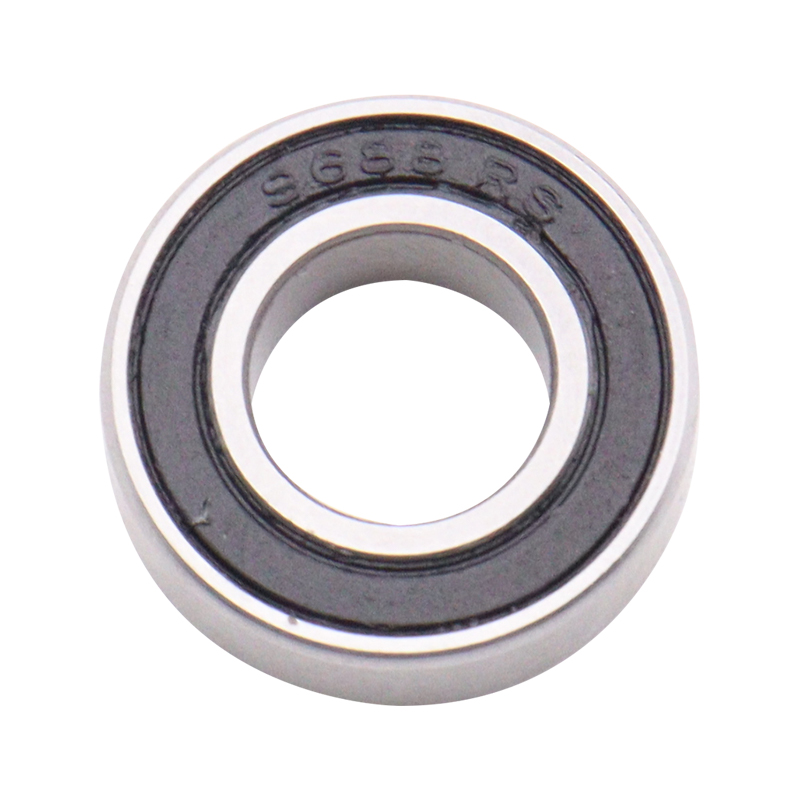
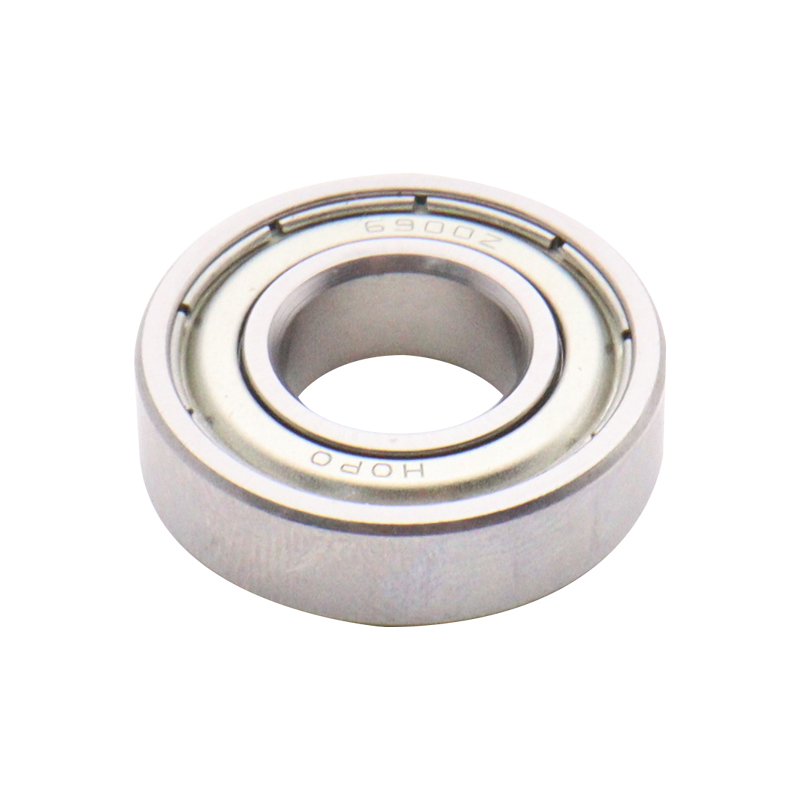
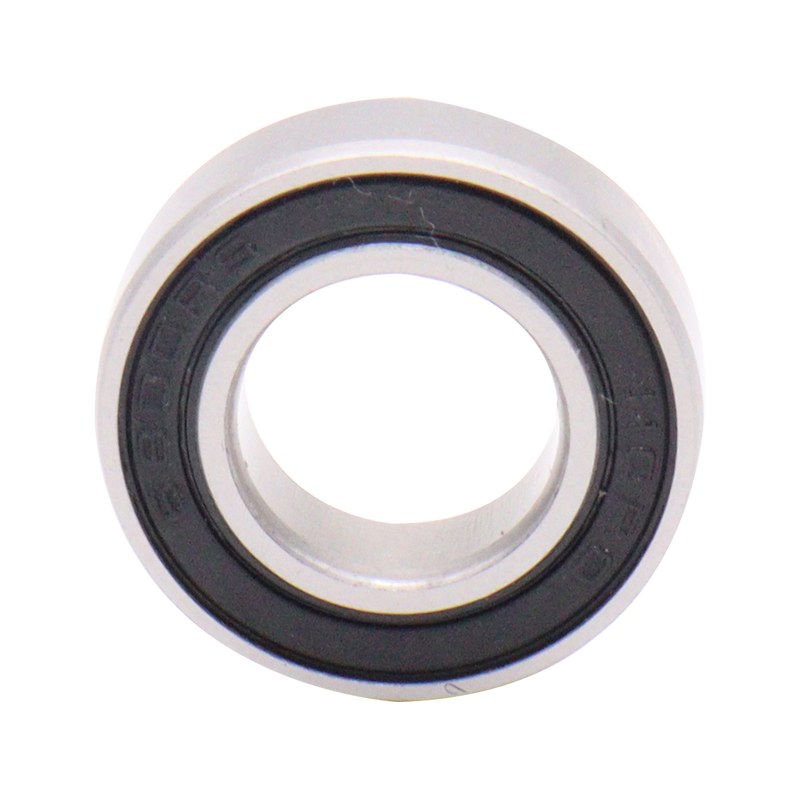
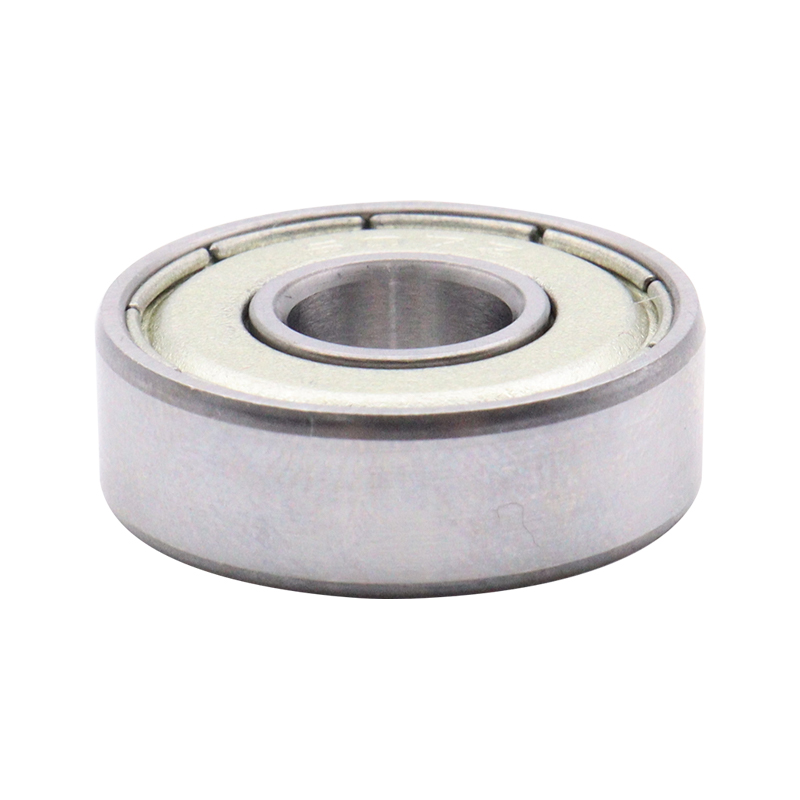
Deep groove ball bearings are highly favored in contaminated environments because they are readily available with a wide variety of integral shielding and sealing options. Metal shields provide non contact protection against large particles while retaining grease at normal temperatures. For wet or dusty environments, contact rubber seals made of nitrile butadiene rubber or fluorocarbon elastomers are securely snapped into the outer ring grooves, pressing firmly against the inner ring shoulder. This creates a secure barrier that blocks contaminants and retains internal grease, eliminating the need for external relubrication systems.
Angular contact ball bearings, particularly high precision variants or larger industrial configurations, are typically supplied as open bearings. This is because they are frequently installed inside sealed gearboxes or spindle housings where they are continuously bathed in filtered lubrication oil. When angular contact bearings must be used in grease lubricated environments, external labyrinth seals or specialized housing seals are designed into the machine assembly to protect the open rolling elements. In recent years, bearing manufacturers have expanded their catalogs to include sealed, pre greased angular contact pairs for specific applications like automotive wheel hubs, providing a compact solution that reduces installation complexity and maintenance overhead.
Engineering Conclusion for Strategic Sourcing
In summary, neither deep groove nor angular contact ball bearings can be labeled as universally superior. Each represents a unique engineering solution tailored to specific mechanical challenges. Deep groove ball bearings remain the undisputed king of cost efficiency, versatility, simplicity, and high speed radial performance, making them the backbone of general industrial machinery. Angular contact ball bearings are highly specialized instruments of load capacity, rigidity, and multi axial control, serving as the essential choice for high precision, high thrust applications. For manufacturing facilities and exporters, maintaining a deep technical understanding of these product differences ensures that the correct engineering solution is always delivered to global clients, maximizing machine uptime and cultivating long term industrial partnerships.
FAQ (Frequently Asked Questions)
1. Can a deep groove ball bearing completely replace an angular contact ball bearing?
No, a deep groove ball bearing cannot replace an angular contact ball bearing in applications that experience significant, continuous axial loads. While deep groove bearings can support minor axial forces, heavy thrust loads will cause the balls to override the raceway shoulders, leading to rapid heat generation, friction increases, and mechanical failure.
2. Why are angular contact ball bearings typically mounted in pairs or combinations?
Single row angular contact ball bearings can only support axial loads in one direction. Additionally, when a radial load is applied, the internal geometry of the angled raceway generates an inherent induced axial force. To counteract this force and support thrust loads in both directions, they must be counterbalanced by a second bearing mounted in an opposing direction.
3. How does the contact angle affect the performance of an angular contact ball bearing?
The contact angle directly dictates the ratio of radial to axial load a bearing can support. A smaller contact angle allows for higher rotational speeds and greater radial capacity but lower axial capacity. A larger contact angle maximizes the bearing’s axial thrust capacity but lowers its maximum allowable speed rating.
4. What are the visible physical differences between these two types of ball bearings?
When looking at an open bearing, a deep groove ball bearing has symmetric raceway walls on both sides of the inner and outer rings. An angular contact ball bearing will clearly show an asymmetric profile where one side of the outer or inner ring shoulder is machined down significantly lower than the other side, exposing more of the cage and balls.
5. What are the primary indicators that a ball bearing is failing due to incorrect load selection?
If a deep groove bearing is failing due to excessive axial load, inspection will reveal a heavy, worn tracking path riding up high on one side of the raceway shoulders. Common operational symptoms include sudden temperature spikes, an increase in running noise or high pitched whistling, and increased rotational resistance or shaft binding.
References
- ISO 281: Rolling bearings — Dynamic load ratings and rating life. International Organization for Standardization. This standard provides the foundational engineering formulas used to calculate rolling element bearing lifespan under variable radial and axial loads.
- SKF Group Technical Handbooks. Principles of Rolling Bearing Selection and Application Engineering Data. These comprehensive technical documents outline the specific geometric differences and preloading guidelines for standard precision ball bearings.
- ANSI/ABMA Standard 9 — Load Ratings and Fatigue Life for Ball Bearings. American Bearing Manufacturers Association. This publication defines the standard testing methods and load capacities for deep groove and angular contact series.
- NSK Rolling Bearings Analysis Guides. Mechanical Performance of Sealed and Shielded Ball Bearings. This technical literature analyzes the speed limits, cage friction coefficients, and lubrication behaviors of high speed industrial components.
- Harris, T. A., & Kotzalas, M. N. Rolling Bearing Analysis. Fifth Edition. CRC Press. A primary academic and engineering textbook detailing the internal stress distribution, contact mechanics, and kinematic dynamics of angular contact and deep groove arrangements.
Selected Bearing Display

 Download Catalog
